16th February 2026
11 Reasons Why Hikers Make Great Partners
There is a multi-billion dollar industry dedicated to helping you find the right partner, and as far as I can tell it has produced a great deal of personality quizzes, several competing theories about attachment, and approximately zero improvement in the divorce rate.
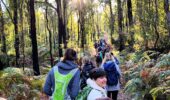
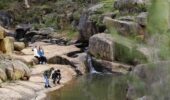
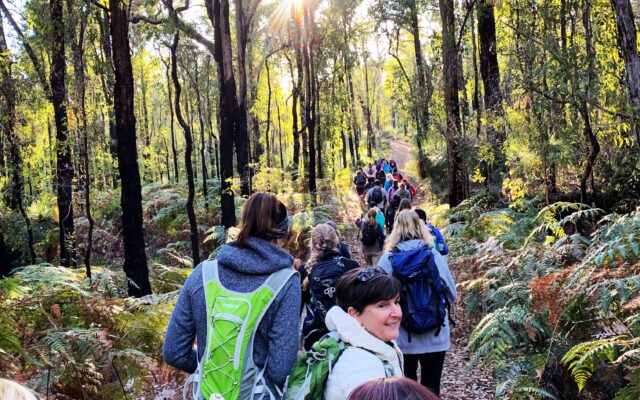
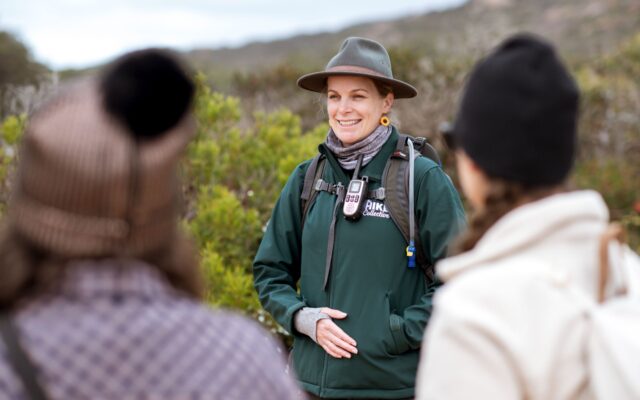
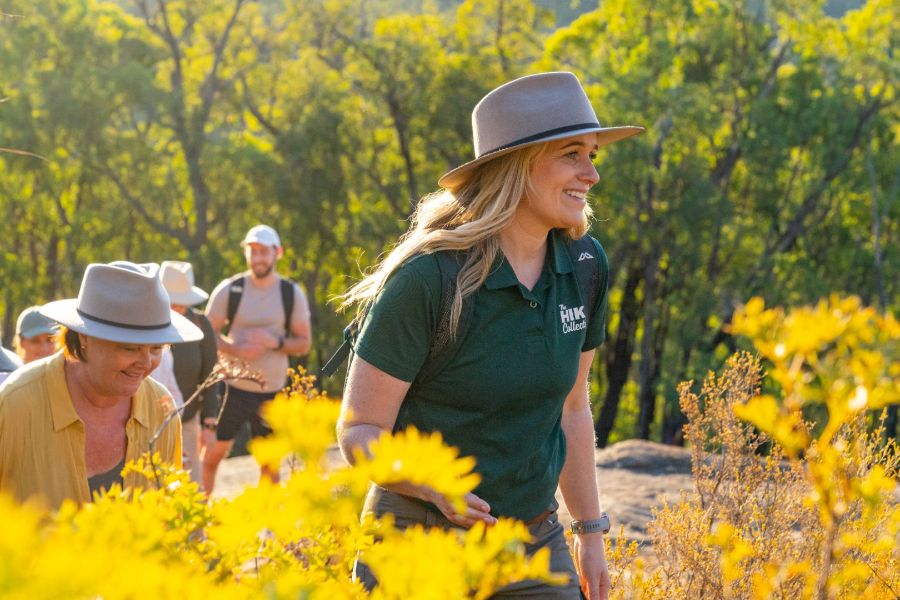
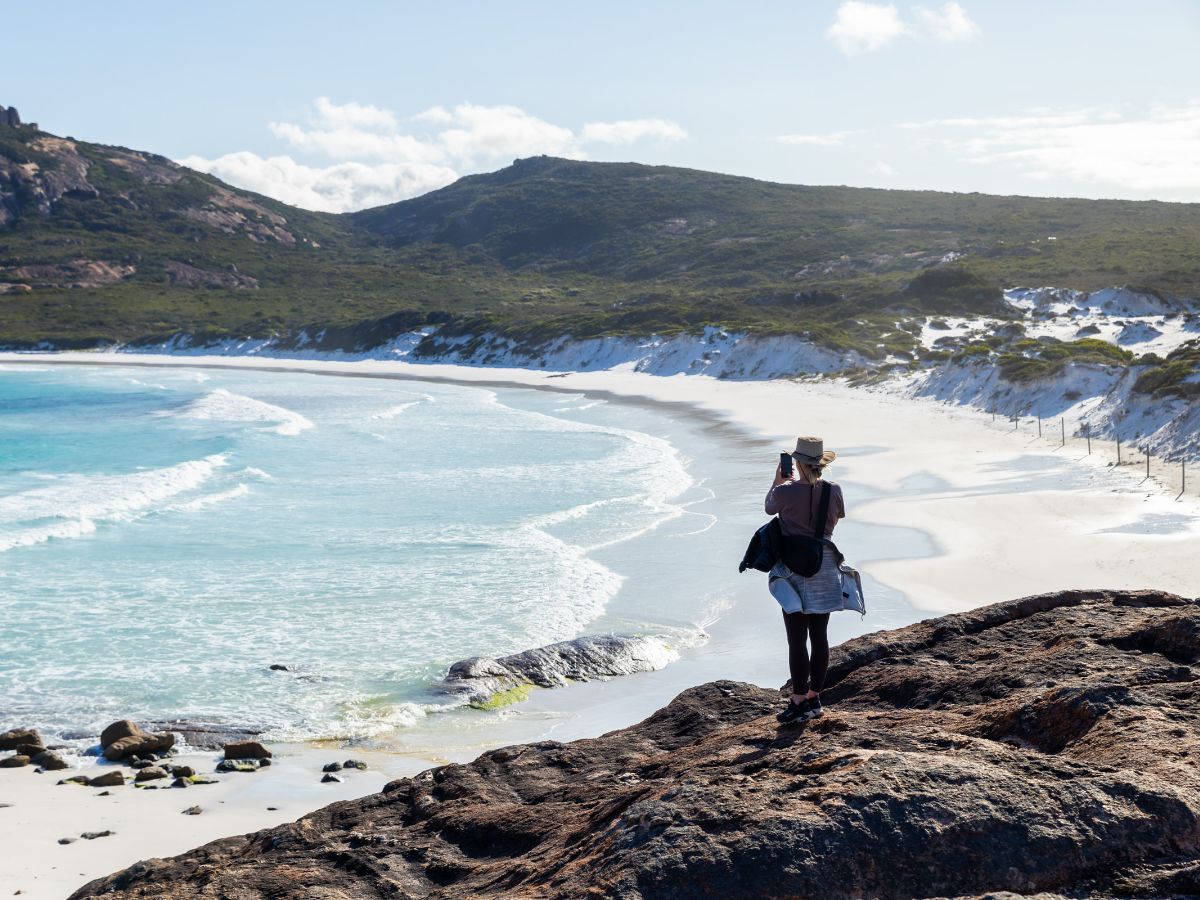
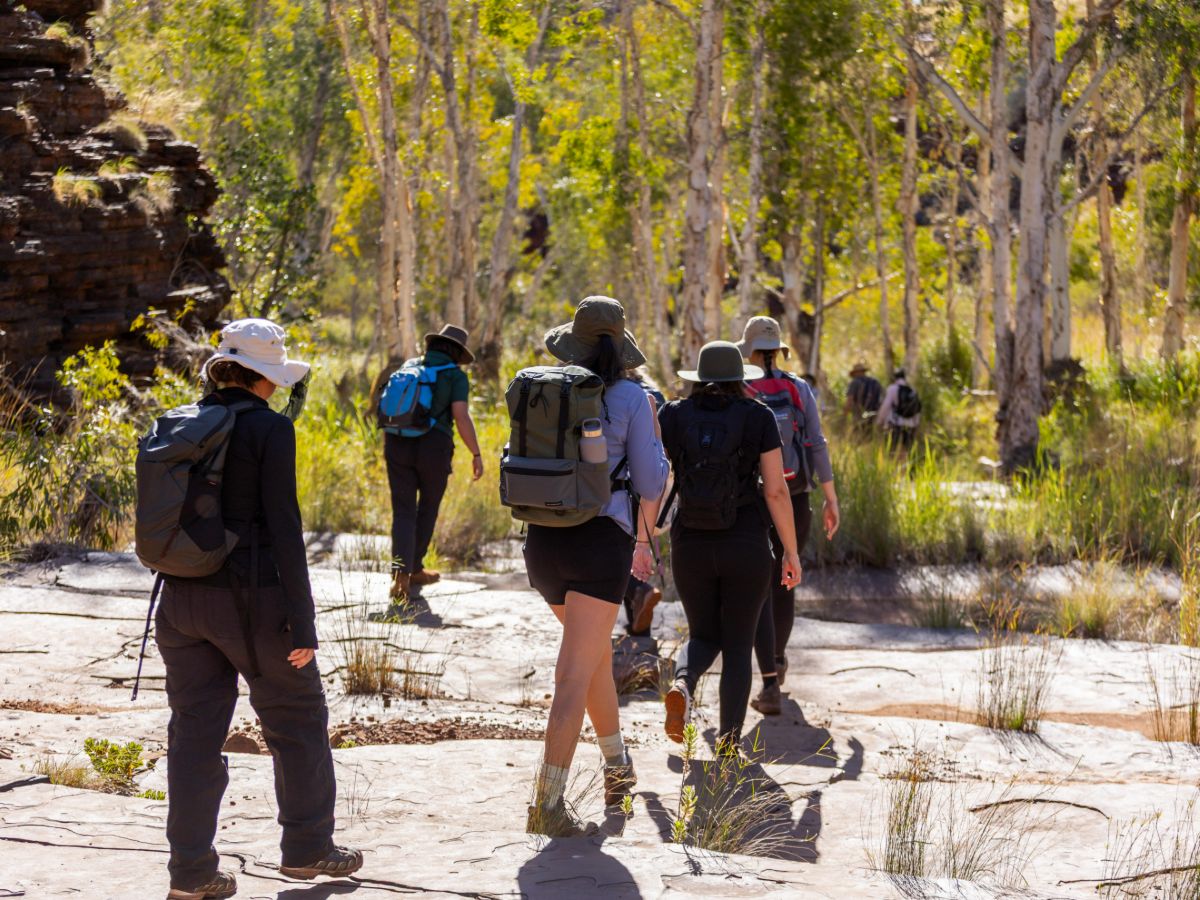
I have a simpler diagnostic, which I arrived at by accident after ten years of walking people through wild places in Western Australia. Watch how someone behaves on a trail. Not a paved boardwalk with a coffee cart at the end, but an actual trail – uneven ground, weather that changes, a few hours longer than they’d have chosen for themselves.
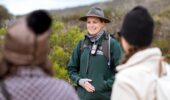
I’ve now done this with over 25,000 people across Kings Park, Rottnest Island, Karijini, and Esperance, and the thing that keeps surprising me is not what the trail reveals about who someone already is, but what it quietly builds in them over the course of a few hours. Which is a far more interesting thing to bet on, romantically speaking.
So in the spirit of Valentine’s Day, and because I’d rather write this than anything involving roses, here are eleven things I’ve watched hiking do to people that make them considerably better to be around.
They learn to read discomfort without catastrophising it.
Rain, heat, a knee that starts complaining at the halfway mark, hikers get a lot of practice sitting with things that are unpleasant but not actually dangerous, which turns out to be one of the most useful skills you can bring to a relationship, or indeed to a Tuesday.
They stop caring about appearances fairly quickly.
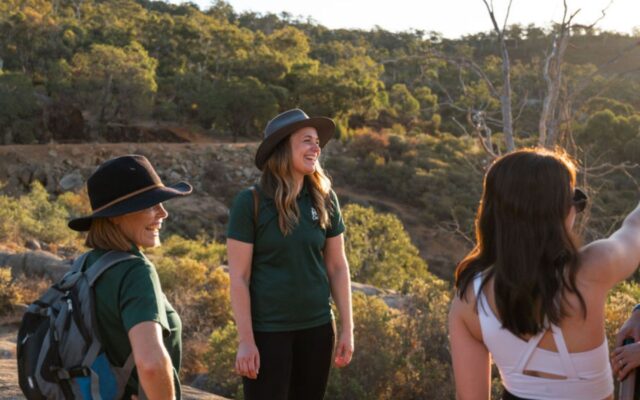
Nobody on a ridgeline has ever asked what someone else was wearing. What matters up there is whether you can navigate, carry your weight, and keep your head when the weather turns, and I have watched this reprioritisation happen in people who arrived in brand new hiking boots they bought that morning. A sunrise from the right vantage point, it turns out, does more for most people than any luxury setting, which is also considerably cheaper.
They develop an involuntary respect for pacing.
You cannot sprint a mountain, or rather you can, but the mountain doesn’t adjust its gradient to accommodate your enthusiasm, so you just burn out earlier and in a worse mood. Hikers learn, often the hard way, on a hill that looked shorter from the car park, that sustained capacity comes from rhythm rather than intensity. Anyone who has tried to hurry a seasoned hiker uphill knows who wins that argument.
They take preparation seriously without being precious about it.
Before every hike there are weather checks, route planning, gear decisions, and a handful of contingency plans that will probably never get used but exist because the environment deserves to be taken seriously. This is not anxiety, it’s respect. And the kind of person who checks the weather before taking you somewhere is also the kind of person who remembers your parking meter is about to expire, which sounds trivial until it isn’t.
They have a healthy relationship with false summits.
Every hiker knows the feeling of thinking they’ve reached the top only to discover the trail keeps going, and the difference between an experienced hiker and an inexperienced one is that the experienced one has stopped being personally offended by this. They recalibrate without losing momentum, which is useful on a mountain and essential in a long-term relationship, where the false summits just keep coming and the people who last are the ones who’ve learned to find them funny rather than devastating.
They’ve made friends with silence.
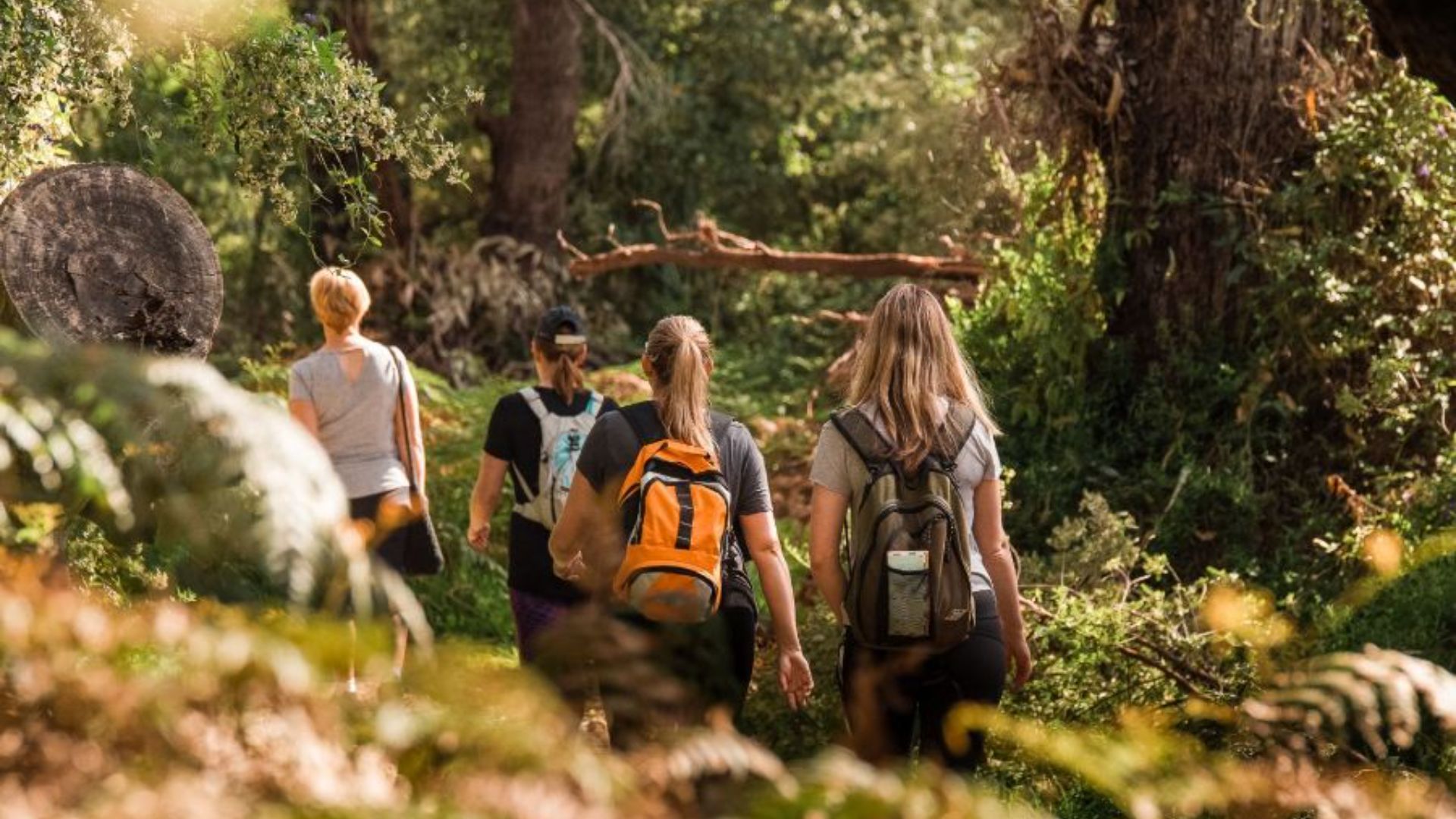
Most people fill silence because it makes them nervous, and I have spent a decade watching what happens when they stop. About thirty minutes into a walk, once the small talk has run out and the trail has taken enough of their attention that they forget to perform, something shifts. The bird call gets louder. The breathing evens out. And the person beside them, who has been carrying something they haven’t said, finally says it.
The best conversations I have ever witnessed between couples, between colleagues, between total strangers, happened not because someone facilitated them but because the silence had done its work and the real thing could surface.
Their nervous system works differently.
This isn’t motivational. Bilateral movement through green places with reduced sensory noise shifts the body from sympathetic to parasympathetic dominance, which is the clinical way of saying that walking somewhere specific makes you calmer, more creative, and significantly less likely to start an argument about whose turn it is to empty the dishwasher. A hiker who suggests a walk when things feel tense is not avoiding the conversation. They’re optimising the conditions for having it.
They know how to support someone uphill without making it weird.
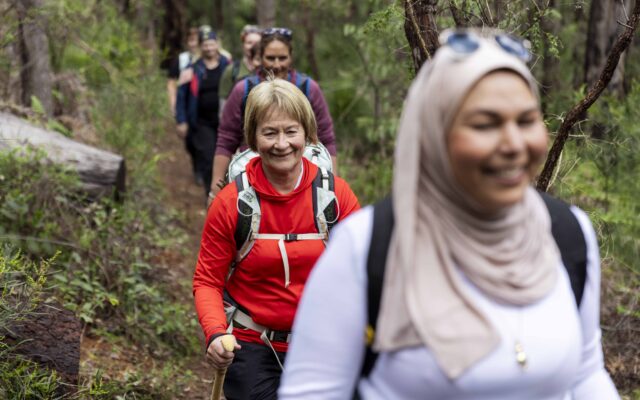
On a steep section, the instinct of an inexperienced person is to grab your arm and haul you up, which is both unhelpful and slightly patronising. An experienced hiker slows their pace, walks beside you, and offers encouragement without pressure, which is a small act that contains an entire philosophy of partnership: match someone’s stride rather than dragging them to yours. I have yet to find a better metaphor for what a good relationship actually looks like in practice, and I’ve been looking.
They’ve learned what actually matters by carrying the alternative.
Every unnecessary item in a pack makes the walk harder, and hikers figure this out fast. What survives the cull is always the same: water, navigation, warmth, good company. Give a hiker a decent view, simple food, and someone worth talking to, and they are genuinely, uncomplicatedly happy, which is a quality so rare in adults that it probably deserves more attention than we give it.
They can function inside fear rather than pretending it doesn’t exist.
Loose rock, narrow ridges, weather that rearranges itself in minutes, hikers don’t stop being afraid of these things. They just get better at thinking clearly while afraid, which is completely different from being fearless and, in my experience of watching thousands of people on exposed terrain, far more useful. The partners worth keeping are not the ones who seem unshakeable but the ones who are visibly scared and moving forward anyway, because they’ve had enough practice to know the fear passes and the view doesn’t.
They picked a hobby that guarantees difficulty and kept showing up.
Of all the leisure activities available to a person living in the twenty-first century — and there are a truly staggering number of them, many involving screens and climate control — hikers chose the one that reliably involves discomfort, uncertainty, and the possibility of getting rained on. And they keep choosing it. Not because they are masochists, but because somewhere along the way they worked out that the climb is where the interesting stuff happens, and that a life optimised entirely for comfort is a life optimised for nothing in particular.
The dating apps, if anyone’s interested in my unsolicited opinion, have the whole thing backwards. They’re trying to match people based on compatibility — shared interests, similar values, the right height — when they should be optimising for the conditions that make people become better versions of themselves. You don’t find a great partner by swiping through thousands of profiles. You walk with someone, in the right place, for long enough that the biology does something neither of you planned, and you both come out slightly different.
Place is the most underleveraged variable in human capacity. In work, in love, in everything.
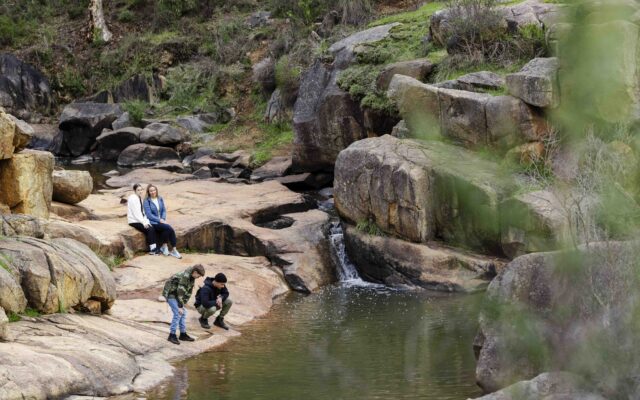
Happy Valentine’s Day. Take someone you like for a walk. Somewhere with uneven ground and no phone signal. See what happens.