16th April 2026
What Happens When You Make Community Non-Negotiable
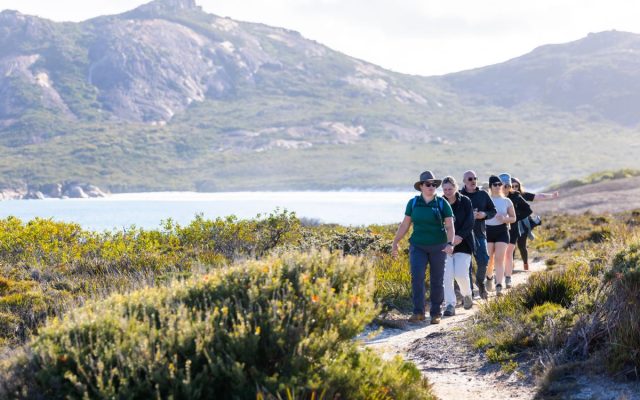
Ten years ago I started taking strangers into the bush on Saturday mornings and charging them nothing.
People assumed this was generosity. It wasn’t, particularly. It was closer to an experiment I didn’t have the language to describe, and a suspicion that place does the work that programs claim to do, that a trail handles in two hours what a workshop struggles to manage in two days, and that the only thing standing between most people and that discovery was the decision to show up.
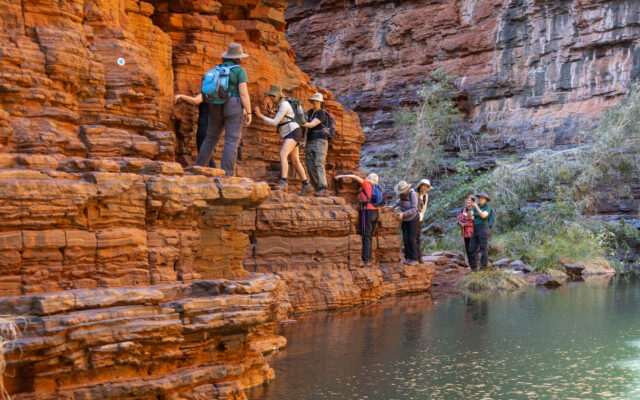
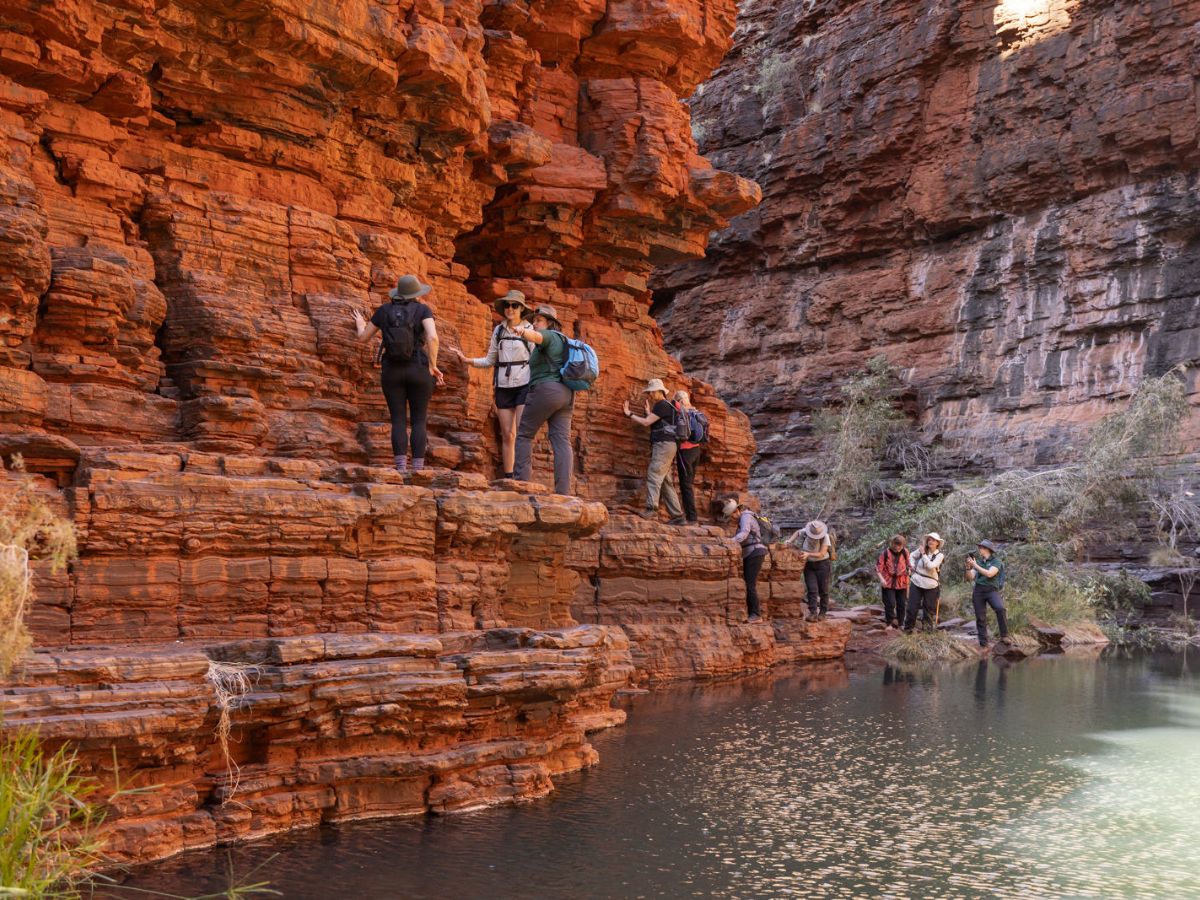
The Social Hike ran, then The Hike Collective grew around it, building corporate programs, Karijini multi-day experiences, tours crafted with enough care that people pay properly for them. And the whole time, one fact kept surfacing that I couldn’t make comfortable.
The people who most needed what I’d stumbled onto on those Saturday mornings were the least likely to ever encounter it.
Let me tell you what the research actually says, stripped of the wellness industry language that usually surrounds it.
The WHO estimates that 12 billion working days are lost every year to depression and anxiety, at a cost of USD $1 trillion annually in lost productivity. That number is so large it stops meaning anything. So here’s a smaller version: an estimated 15% of working-age adults are living with a mental disorder at any given point in time. In a room of twenty people, three of them. The forest doesn’t discriminate and neither does the data.
What the data also says, consistently, across country, season, income level and geography, is that time in nature produces measurable change in the people who access it. A 2025 meta-analysis of 78 studies found that nature exposure produces significant mental health benefits, with improvements observed from exposures as short as ten minutes.
An 18-country study of 16,000+ people found that frequency of visits to green and blue spaces was consistently associated with higher wellbeing and lower mental distress, and that regular nature visits were linked to a lower likelihood of using medication for depression. Across 18 countries and seasons, the benefit holds.
The forest doesn’t distinguish between patients.
But access does.
70% of low-income communities face nature deficits – That’s a rate 20% higher than moderate to high income communities. The people carrying the highest mental load, working the longest hours for the least return, living furthest from green space, these are precisely the people the research says would benefit most, and precisely the people least likely to spend a weekend in a guided experience in the jarrah forest.
This is worth sitting with. We are not talking about luxury goods or discretionary spending. We are talking about a resource that demonstrably reduces the neural correlates of depression, that costs governments trillions in lost productivity when people can’t access it, and that is distributed in inverse proportion to need. The people who could most use a morning in the trees are the people least likely to get one.
This is not a niche observation. It is a structural problem. And the conventional response to structural problems is a charitable program, a subsidised spot, or a line in an impact report- a way of acknowledging the problem while leaving the structure intact.
I wanted to build something that couldn’t be quietly discontinued when the budget got tight.
The Wild Access Project is a portion of every paid Hike Collective experience, from every corporate booking to every Wild State Weekender, redirected permanently into community access. It isn’t contingent on surplus. It’s just how the numbers work.
The problem I am interested in solving isn’t how to look like a business that cares about community. It’s how to make community access happen regardless of whether anyone is watching.
The answer was to make it structural. A mechanism, not a gesture.
Think about what that actually means in practice. When a company books The Hike Collective for a corporate wellbeing day, and pays properly for it, because they understand the value, a portion of that revenue flows directly into making a Saturday morning hike free for someone who couldn’t have justified the spend. The corporate client gets a world-class facilitated experience. Someone else gets the same quality of time in the same quality of terrain, at a price that doesn’t require justification.
They will probably never meet. But they will have stood in the same forest, under the same canopy, with the same subgenual prefrontal cortex going quiet for the first time in weeks.
There is something about that I find genuinely satisfying. Not because it sounds good on paper, but because it closes a loop that has bothered me for a long time.
What it makes possible matters more than what it is.
The Social Hike stays free because of it. The Wild Access Project is what ensures it holds for the next ten, regardless of what else happens in the business.
The research is unambiguous. The people who get into nature come back different. Less cortisol, lower rumination, better capacity for the week ahead, and restored attention that no supplement produces and no productivity tool replicates.
The Lancet estimates that for every $1 invested in treatment for depression and anxiety, there is a $4 return in better health and productivity. The economics of mental health investment are not complicated. What is complicated is getting people to make the investment before the crisis rather than after it. Before the twelve billion lost days, before the trillion dollar bill, and before the problem becomes acute enough to justify the spend.
The forest is not a treatment. But it is, by the evidence, one of the most cost-effective wellbeing interventions available to any population and it has been available, indifferently and without charge, for considerably longer than we have been studying it.
The Wild Access Project exists because that benefit belongs to everyone. Not as a sentiment. As a design constraint built into the numbers, that holds whether or not anyone finds it admirable.