9th March 2026
The Weight of a Walk
Recognising the thing we almost never say out loud.
A few weeks ago I ran a small experiment. Just me, curious, and forty people willing to answer honestly.
I asked twenty men what they think about when they head out for an evening run, or an early morning walk.
What podcast to listen to. Whether to do five kilometres or eight. Whether the coffee was happening before they left or after they got back. The river trail or the hill.
Then I asked twenty women the same question.
Is it a well-lit trail?
Does someone know where I’m going?
Will there be enough other people?
The men answered with logistics, and the women answered with threat assessment.
The imbalance I want to name today isn’t the boardroom. It isn’t the pay gap. Those conversations are being had loudly, and rightly, by people who have earned the right to shout about them. But there is a quieter one, older, and it lives in the body before it lives anywhere else.
It is the imbalance of feeling safe without having to brace first.
Most women I know have never fully experienced this. Moving through the world — a street, a trail, a car park at dusk — without running a quiet calculation first. Without clocking the figure fifty metres ahead. Without the small, practised recalibration that happens so automatically, so below the waterline of consciousness, that most women wouldn’t even name it as fear.
They’d call it Tuesday.
A tax you have always paid becomes invisible. You stop noticing it the way you stop noticing the weight of your own skeleton. You assume the cost of a morning walk includes a threat assessment, that vigilance is simply the entry fee for moving through a life. It isn’t. It’s just not charged to everyone.
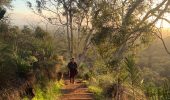
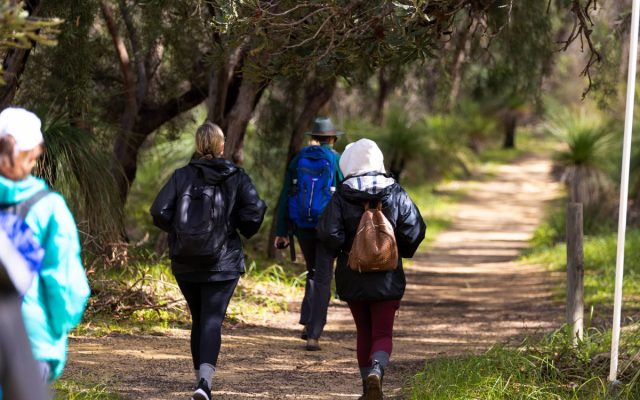
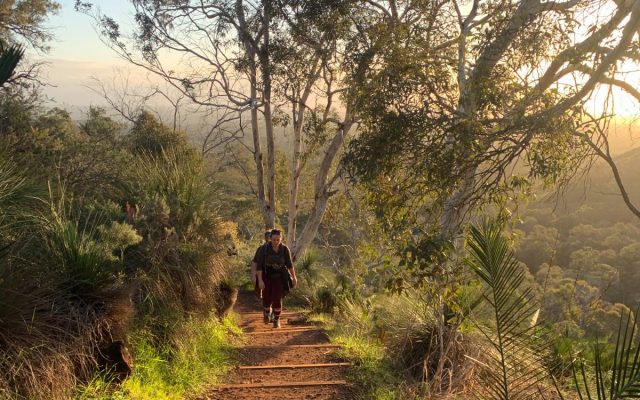
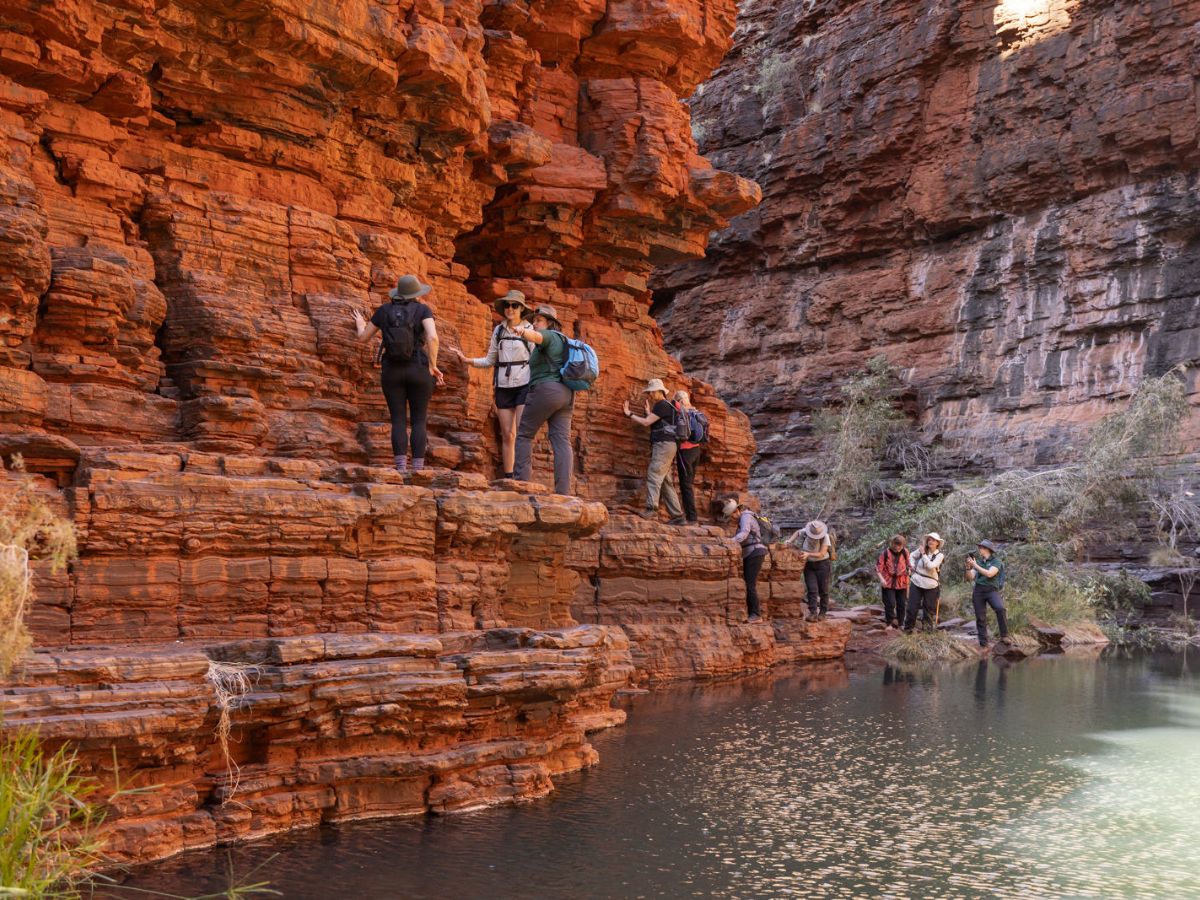
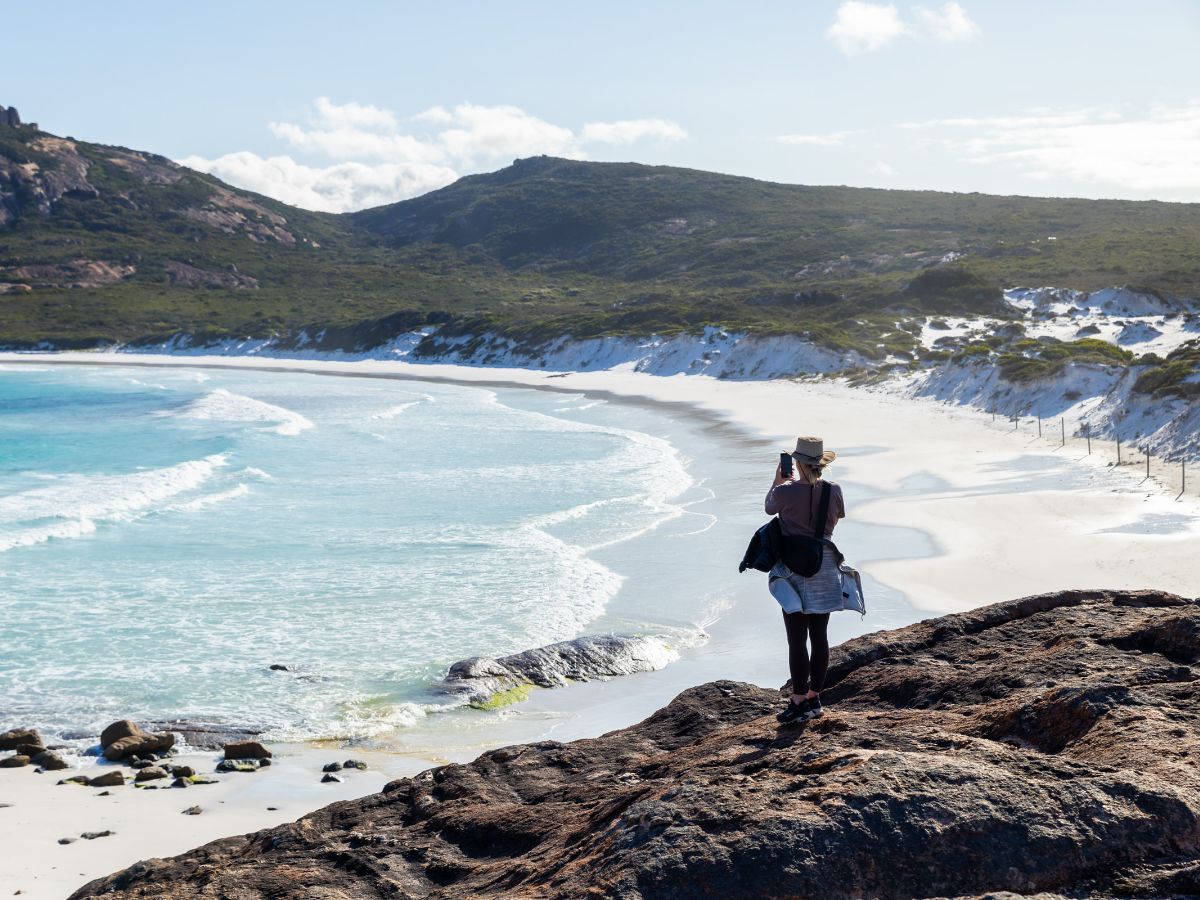
This year for international Women’s day, a group of women pulled on their boots and walked into the bush.
Some had never hiked before, some had done it a hundred times but not like this – not with permission, not surrounded by other women who had also decided that one morning belonged to them.
And what I noticed, what I always notice in these places, with these groups, was the moment the vigilance left.
It doesn’t go quickly. The body is unconvinced at first, still scanning, still doing its work. But eventually, the radius of alert shrinks. The body’s question shifts from ‘am I safe here’ to ‘what is this place’, and that is not a small thing. That is the difference between occupying somewhere and inhabiting it.
For many of the women on that trail, it may have been the first time in the week that their nervous system wasn’t doing two jobs at once.
There’s a version of this conversation that concludes women need nature because they are somehow more fragile, more emotionally dependent on a good view. I want no part of that version.
Women need places where the tax is lifted. Where the calculation can stop. Where the body is allowed to simply be somewhere, rather than continuously auditing whether that somewhere is safe.
Cognitive restoration requires the system to actually be at rest. Vigilance is a background process, it narrows attention, consumes resources, quietly forecloses the kind of open, unhurried thinking that restoration depends on. You cannot restore something that is still braced.
Which means a great number of women are being sold the idea of restoration while still paying the entry fee that makes it unreachable.
Now, I feel the quiet, unromantic insistence that this matters, that it’s visible, and that it changes in the right conditions.
Wild places do something specific when they’re well held. Not because nature is inherently healing, but because for most of human history, wild terrain was where women moved together, held by something too large for any individual threat to dominate. The nervous system carries that memory. It doesn’t need explaining. It just needs the conditions.
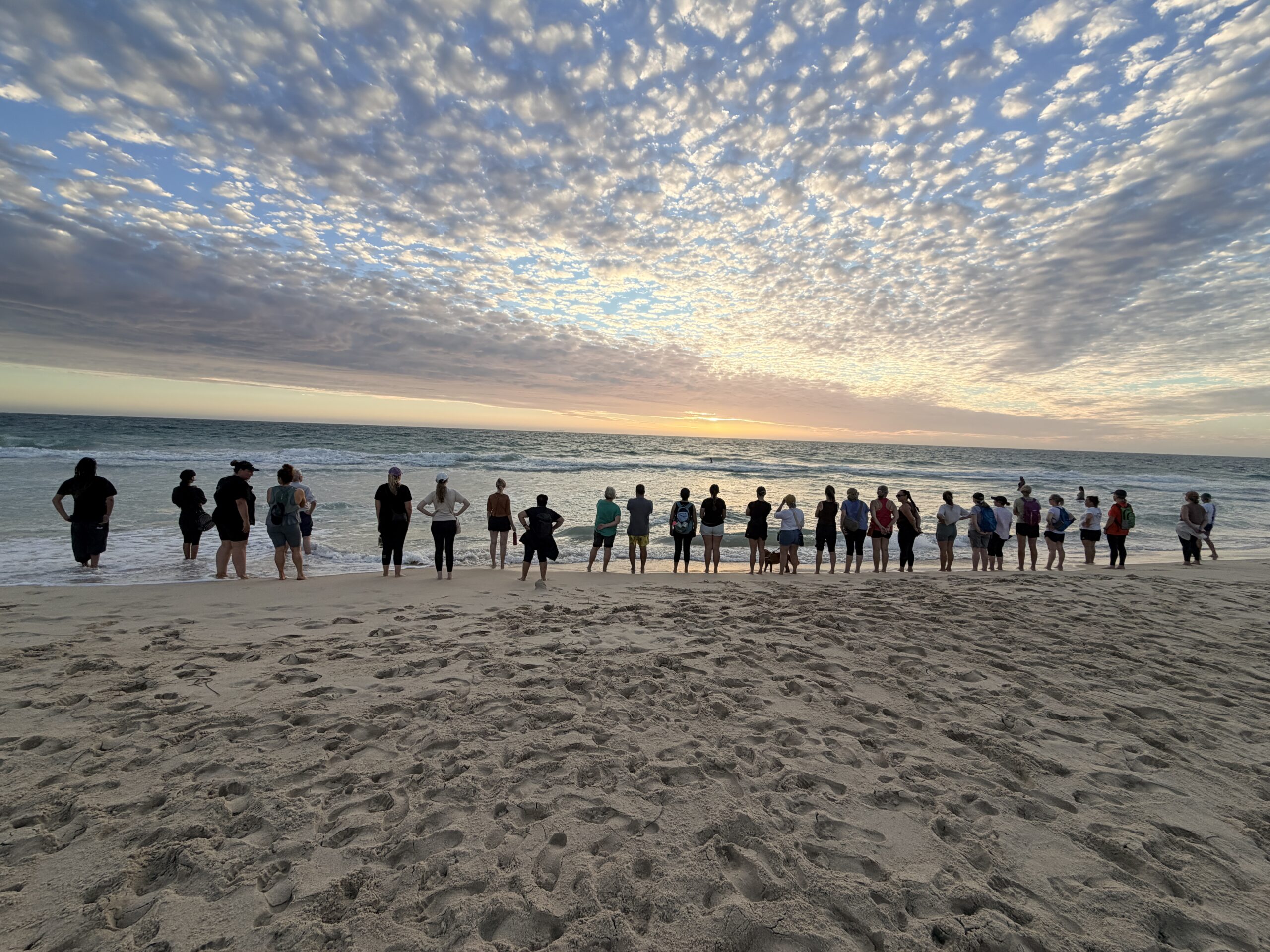
So, on that day, on a hill, in late afternoon light, surrounded by women who had decided that one evening was theirs, I watched the conditions work.
Laughter got louder, awe appeared on faces, and the questions changed.
Is this safe.
Became: what is this.
Balance, felt. Not argued for, arrived at. In a body that finally had nowhere to be but here.
Wild places should be enjoyed this way. They should be the place where logistics come first! The trail, the weather, the kilometres, the coffee, not the threat assessment (That’s our job). Women should be able to arrive at curiosity without having to pass through vigilance to get there. We should be able to ask not ‘is it safe here’ but ‘what have we found here.’
We are not there yet. But things worth having tend to arrive eventually, and the path there is almost always the same: someone has to name it first.
Which brings me to something I think about often.
The men in my experiment- the ones thinking about podcasts and pace and whether five kilometres is enough, are not the problem. They are not withholding something. They are simply in possession of an experience so ordinary to them they have never had reason to examine it. The freedom to move without a background calculation running isn’t something they claimed. It’s something they never had to.
That’s not a character flaw, but rather an awareness gap. And awareness gaps, unlike so many things, are actually quite easy to close.
So if you’re a man reading this, I’m not asking you to feel guilty for thinking about your podcast. I’m asking you to hold just this: the woman who laced up her boots this morning and headed out before work may have made three safety calculations before she reached the end of her street. Not because she is anxious. Because she is experienced.
The conversation starts with knowing that. And the knowing, in my experience, changes people.
Happy International Women’s Day. Let’s Balance The Scales.