27th March 2026
Green Leave and Why The Most Expensive Thing in Your Office Is the Office
Why Gen Z’s “Green Leave” demand is the most commercially interesting workplace idea in twenty years — and why the organisations that dismiss it will pay for that decision in ways that don’t show up on the absence report.
There is a particular kind of management logic that feels so reasonable it has never once been questioned.
Work happens indoors. Productivity is measured in hours at a desk. Wellbeing is a line item, best fulfilled by a subscription to something digital and a fruit bowl refreshed on Tuesdays. And if your staff are struggling — mentally, creatively, motivationally — the answer is a workshop. Held, naturally, in a room. With slides.
This logic has governed the design of workplaces, the allocation of budgets, and the architecture of the working week for the better part of a century. It is so deeply embedded that questioning it feels slightly unserious.
Like suggesting we hold the board meeting in a paddock.
Which is, more or less, exactly what I’m suggesting.
Enter Gen Z, Stage Left, Carrying an Inconvenient Demand
This week I was on 6PR talking about a trend that has generated a remarkable amount of irritation in the management press.
Gen Z would like one paid day a month outside. They are calling it Green Leave. They want their employers to fund it. And the predominant response — from commentators, from HR consultants, from people who have clearly spent too long in conference rooms — has been some variation of lazy.
I want to suggest, with genuine respect for the people who hold this view, that they are wrong. Not morally wrong. Economically wrong. Which, in business terms, is the more consequential error.
Gen Z have not invented a new desire. They have named an old one that the rest of us quietly abandoned sometime in the mid-1990s, when the laptop arrived and we collectively agreed that the correct response to cognitive exhaustion was more screen time.
They are not asking for less work.
They are asking for the conditions under which more work, arguably better work, becomes biologically possible.
That is a completely different request. And it deserves a completely different response.
But Couldn’t They Just… Go for a Morning Walk?
This is the objection I hear most often. And I want to give it the respect it deserves, because it is not an unreasonable question.
It goes like this: if nature is so restorative, why can’t they get it before work? Set the alarm earlier. Put the phone down. Touch some grass on their own time.
On a purely logical level, yes. The parks are open early. The sun rises without requiring a corporate policy.
But notice something about that argument.
We do not apply it to anything else we consider genuinely important.
We do not tell people to develop their professional skills at home and arrive already upskilled. We do not suggest that team cohesion should be built on weekends, through voluntary socialising, at personal expense. We do not propose that the creativity required to solve our hardest business problems should be cultivated privately, before 8am, and carried in through the door like a packed lunch.
When something matters to organisational performance, we fund it. We schedule it. We protect it from the gravitational pull of everything else that wants that time.
The morning walk argument reveals something interesting about how we have silently categorised nature – in the same mental bucket as sleep, exercise, and diet. Personal infrastructure. Individual responsibility. The kind of thing a well-organised adult handles before they arrive, so as not to inconvenience the working day.
But nature isn’t just an input to a human body. It is an input to human cognition, specifically to the quality of thinking, connecting, and creating that organisations are actually paying for.
And there is a second problem, which is more uncomfortable.
The morning walk, taken alone, does something genuinely useful. But it does not do the same thing as time in nature taken together, within the context of working relationships, when the pressure of the actual work is present and immediate.
The restoration is individual. The value to the organisation is collective.
A team that navigates shared terrain, that has a conversation outside the architecture of the office, that experiences the mild cognitive loosening that a decent trail reliably produces — comes back with something that could not have been generated by twelve people each doing their own sunrise jog.
They come back having thought together in a different register.
That is not something anyone can do before work. It requires the work to be there. It requires the colleagues to be present. It requires the organisation to have decided — with budget attached — that this is a legitimate use of a working day.
Gen Z are not asking their employers to subsidise a personal wellness routine. They are asking them to treat nature-based restoration as a collective investment rather than an individual responsibility.
That is not laziness. That is a more sophisticated understanding of what organisational performance actually requires than most HR frameworks currently contain.
The Thing We Already Know and Keep Forgetting
Here is the research, stated plainly.
Thirty minutes in a natural setting begins measurably restoring the cognitive functions that modern work depletes fastest: sustained attention, creative reasoning, emotional regulation, the capacity to think at any useful distance from the immediate and the urgent.
Roger Ulrich found it in 1984, watching hospital patients recover faster in rooms with a window view of trees than in rooms facing a brick wall. They needed less pain medication. They left sooner. The trees weren’t doing anything dramatic. They were just there, registering somewhere below conscious awareness, in the part of the nervous system that evolved across millions of years in landscapes that looked nothing like a CBD.
Stephen and Rachel Kaplan formalised the mechanism. The directed attention our working lives demand — the kind that tracks deadlines, filters notifications, holds three competing priorities simultaneously — is a finite resource. It depletes. And it restores through a specific quality of environmental experience: the effortless, undirected attention that a forest path or a harbour foreshore or a patch of morning light on water invites without demanding anything back.
They called it Attention Restoration Theory. It is, in effect, the science of why a walk works. Why you come back from lunch outside with a different quality of thinking than you left with. Why the best idea in the meeting so often arrives on the way to the meeting, not inside it.
This is not wellness content. This is biology. And it has been sitting in the peer-reviewed literature, largely ignored by the people who design workplaces and allocate team building budgets, for forty years.
The Budget Already Exists. You’re Just Spending It Wrong.
Here is the part that tends to make finance directors sit up slightly straighter.
You are already funding this. Not the outcomes — you’re not getting the outcomes — but the intention.
You have a team building budget. You have a wellbeing line item. You have, in all likelihood, a collection of app subscriptions used by approximately one-fifth of the people they were purchased for, a gym membership that peaks in February and flatlines by April, and an annual half-day in a conference room that everyone attends because it’s mandatory and nobody remembers by the following Thursday.
Research consistently finds that only around 20% of employees engage with corporate wellbeing programs, meaning four out of every five people are quietly, consistently, and entirely reasonably declining whatever it is you’re offering.
This is not a communication problem. It is not a culture problem. It is a product problem. You are selling something people do not want, to people who are not buying it, from a budget that could be spent on something they have now — quite loudly — told you they do want.
Gen Z’s Green Leave demand is, among other things, the most useful piece of consumer research the corporate wellbeing industry has received in years. They are telling you, with unusual directness, what the product should be.
The question is whether you’re listening, or whether you’re too busy being offended by the tone of the request.
What It Actually Looks Like
This is the point at which the conversation usually gets vague. Nature is good for you. We should go outside more. Someone should probably organise something.
I want to be specific. Because specificity is where an idea becomes an operation, and operations are where intentions become outcomes.
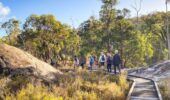
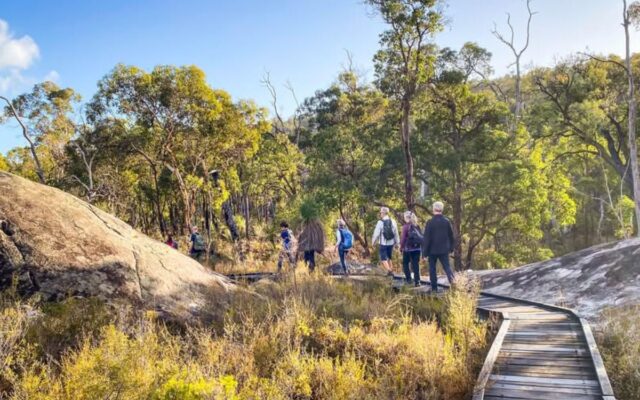
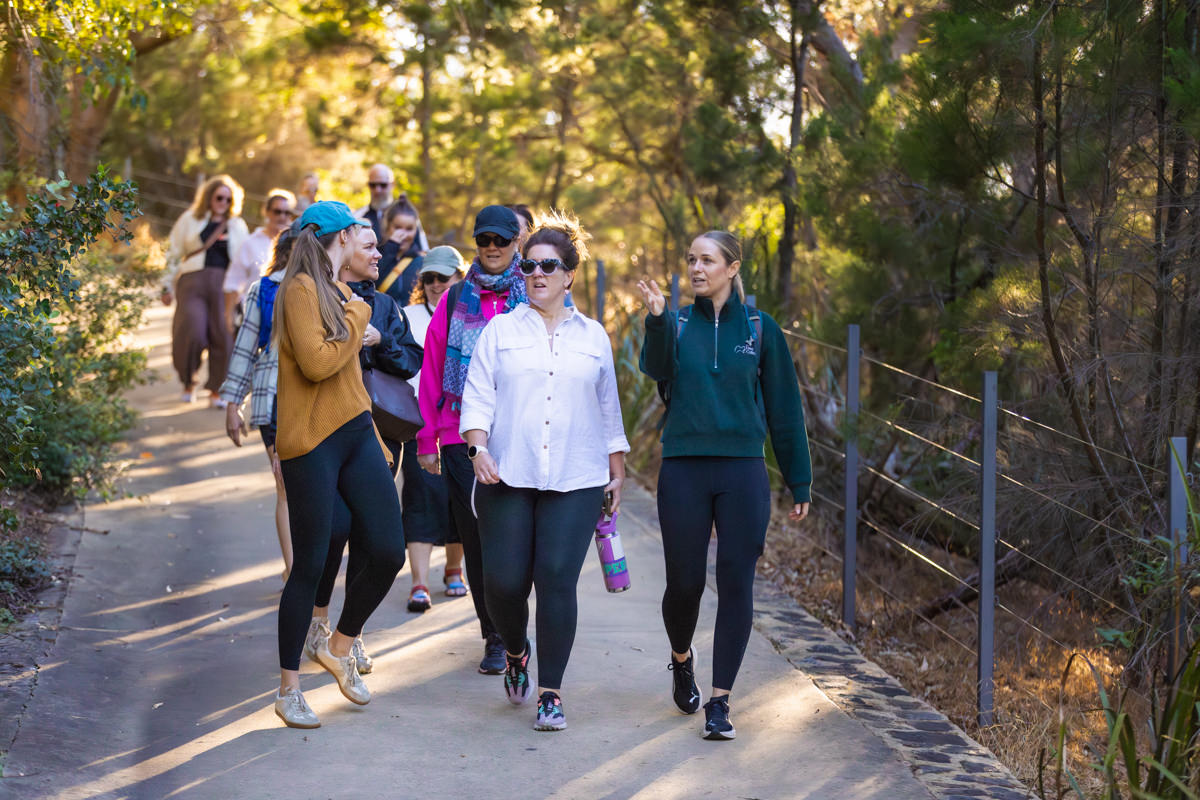
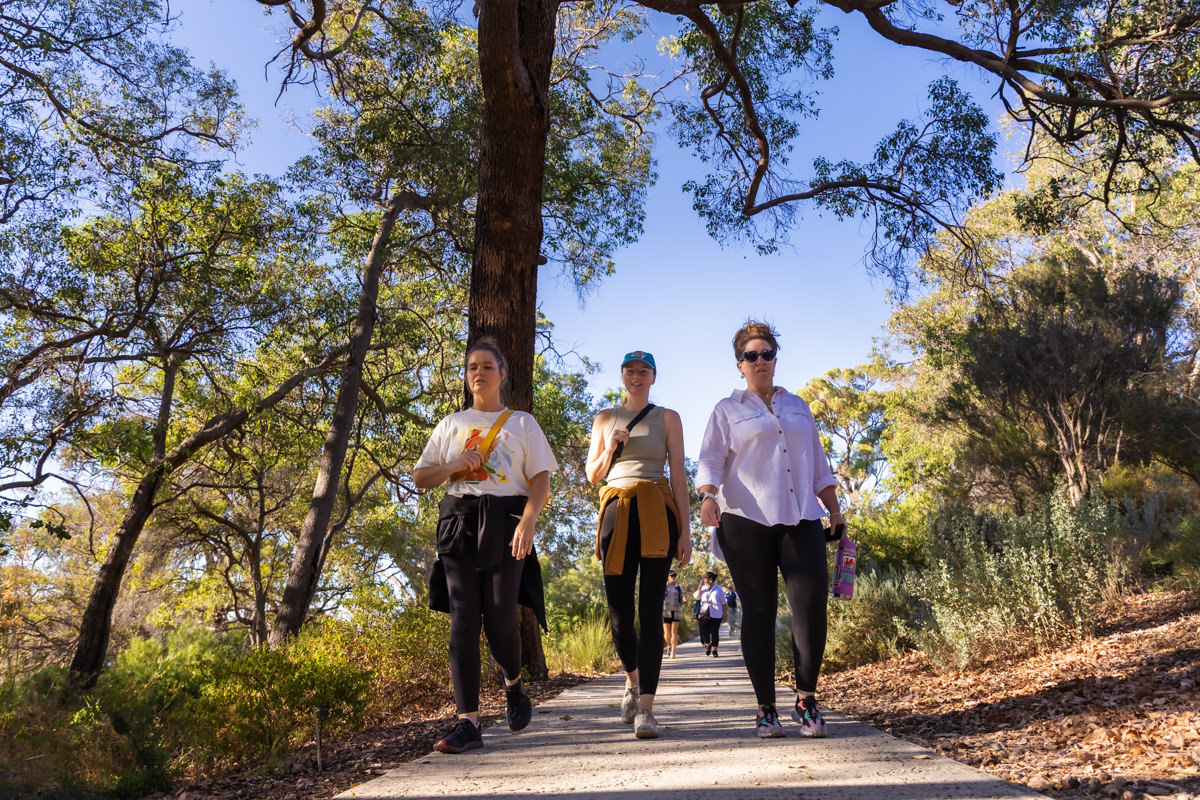
We work with companies across Western Australia to design what I think of as the nature-led working week- not as a retreat, not as an annual offsite, but as recurring infrastructure embedded into how teams actually function. Here is what that looks like in practice.
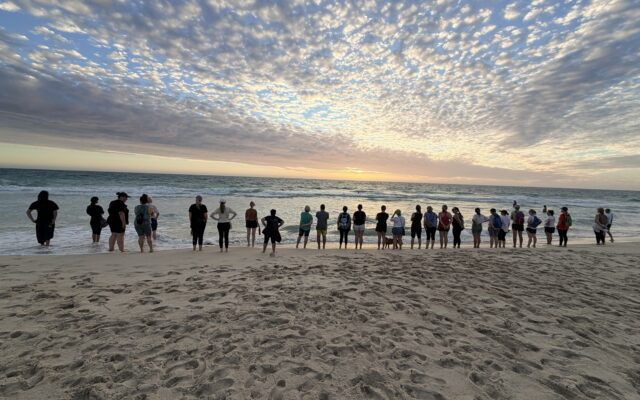
The Quarterly Green Day. Once every three months, a half-day outside replaces your existing team building slot. Same objectives — connection, creativity, strategic thinking, culture. Different address. Facilitated, purposeful, structured around terrain that does specific cognitive work. You are not abandoning your agenda. You are giving it a better room.
Walking Meeting Routes. We design the route from your office door, mapped to the greenest corridor available within your meeting window, whether that’s thirty minutes or ninety. QR codes go straight to your team’s phones. The research on walking meetings is consistent: movement activates divergent thinking in ways that seated discussion simply does not.
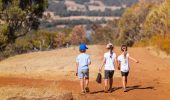
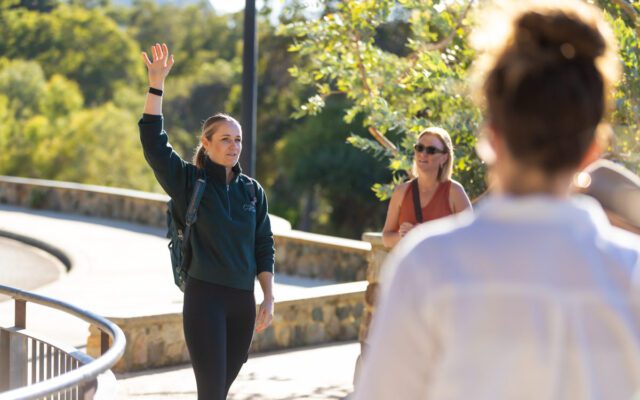
Hosted NetWalking. One hour, outside, moving. We facilitate the introductions, hold the structure, and let the trail do what trails reliably do to human conversation: flatten hierarchy, slow the pace, remove the performance layer that sitting across a table from someone tends to activate. The ideas that surface on a NetWalk are structurally different from the ideas that surface at a networking event. Better questions. More honest answers.
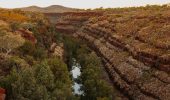
Strategy Sessions on Trail. Your annual planning day, redistributed across terrain. Open landscapes produce open thinking. Contained, demanding terrain produces focused, disciplined thinking. If you are spending two days trying to think at the scale of the next three years, where you do that thinking is not incidental. It is the decision.
Green Onboarding. Your new starters’ first week includes a walk. They learn the city, meet the team outside the org chart, and arrive on day two having formed actual memories of actual people in actual places. It is the fastest route to psychological safety I have found in a decade of working with teams.
The Real Argument
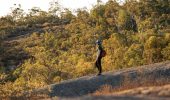
I have spent ten years guiding people through terraini. I have watched what happens to a person, reliably and repeatedly, when you put them in the right place long enough for their biology to notice.
The transformation is not dramatic. It doesn’t look like a conversion experience. It looks like a silence that nobody feels the need to fill. Like a question asked on a trail that would never have been asked in a boardroom, because the boardroom makes a certain kind of honesty impossible and the trail makes it, somehow, ordinary.
I call this The Wild State. Not wilderness, not extreme nature, not anything requiring special equipment or unusual fitness. Just the specific neurological shift that occurs when a human being is placed in a natural environment and given, briefly, permission to be somewhere other than in front of a screen.
The Default State — what most of us are living in, most of the time — is not pathological. It is simply the predictable consequence of an environment designed entirely around directed attention, artificial light, and the steady elimination of everything unplanned.
Gen Z didn’t create the Default State. They inherited it, along with its consequences — the anxiety, the attentional fragmentation, the persistent low-grade exhaustion that no amount of screen-based self-care seems to touch. And they have, with the directness of people who have nothing invested in the previous consensus, simply named the exit.
Green Leave is not a demand for less work.
It is a demand for the conditions that make work possible.
The organisations that understand this distinction first will not just have happier staff. They will have staff who think better, connect more genuinely, recover faster, and stay longer.
That is not a wellbeing argument.
That is a competitive advantage.
The Hike Collective designs nature-led workplace experiences for corporate teams across Western Australia — from walking meeting routes to quarterly Green Days to full offsite strategy sessions and leadership retreats on trail. If you’re ready to redirect your team building budget somewhere it actually works, start here.