14th January 2026
Place, Presence and Human Performance
What a decade guiding people through wild places taught me about the difference between seeing a destination and being changed by the journey.
The tourism industry does something extraordinary. It gets people to show up. Every compelling campaign, every destination marketing organisation, every “best of” list, they create desire. They make people want to be somewhere they’ve never been. That’s a kind of magic, and I wouldn’t be doing what I do without it.
But showing up is only the beginning.
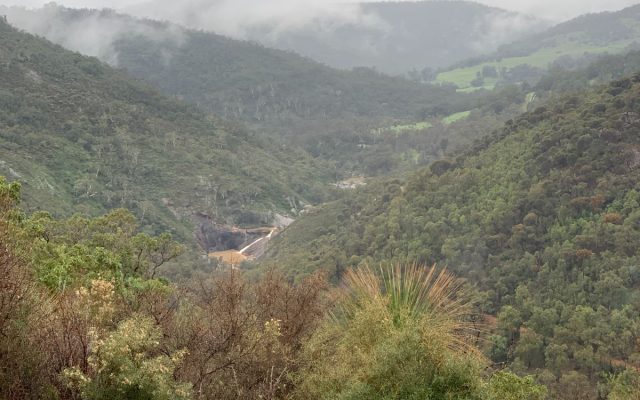
After a decade of guiding people through Western Australia’s gorges, ridgelines, and coastlines, I’ve noticed something. Two people can visit the same place on the same day. One takes a photo and leaves essentially unchanged—a destination checked off a list. The other comes back different. Something has shifted in their nervous system, their relationships, their sense of what’s possible.
Same place. Completely different outcome.
The difference isn’t luck or personality. It’s what I’ve come to call the Traveller State—a psychological condition where the nervous system regulates, mental defences drop, and genuine capacity for change opens up. It’s what holidays accidentally create in some people, some of the time. And it’s what I’ve learned to deliberately engineer.
The destination gets them there. The journey transforms them.
Tourist vs Traveller: The Research
Tourism research has documented this distinction for decades. Sociologist Erik Cohen first proposed the difference between institutionalised and non-institutionalised forms of travel in 1972. A tourist, he suggested, travels as a way of escape or amusement. A traveller travels to fulfil an intrinsic desire for exploration.
But it goes deeper than motivation. The tourist will describe what they saw at a place. The traveller describes what they encountered—how they felt looking at a particular vista, what they were thinking as they walked a certain path. The distinction is between observation and immersion. Between passing through and being shaped by.
Tourism psychology has identified that travellers approach destinations with what researchers call an “engagement mindset”, viewing travel as an opportunity for growth and self-discovery. They embrace ambiguity rather than seeking control. They prioritise depth over breadth. This mindset correlates with measurable differences in post-trip wellbeing and lasting behavioural change.
What Happens on Trail
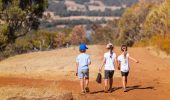
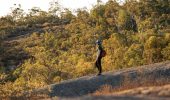
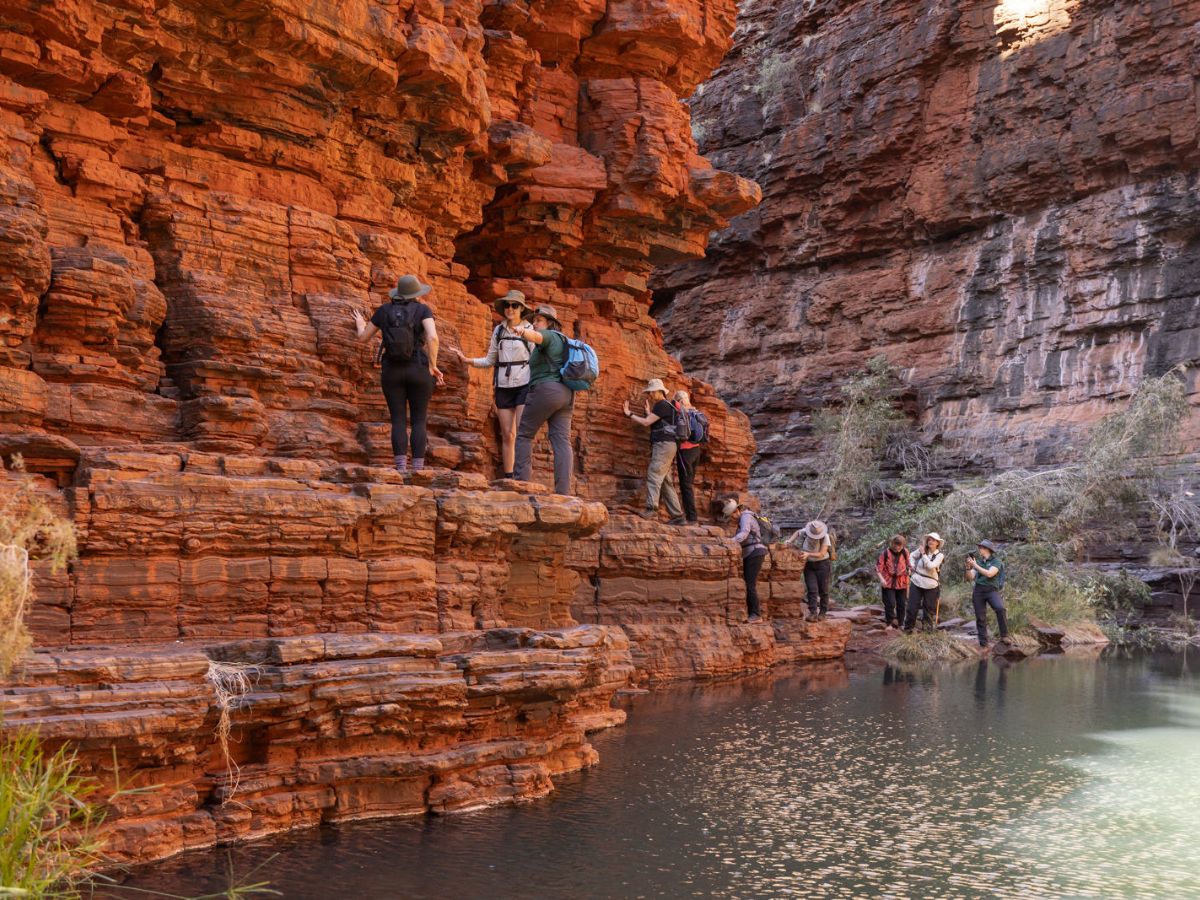
Here’s what I’ve observed on trail, hundreds of times over: something happens to people when they walk through unfamiliar terrain. Fifteen to twenty minutes in, the phones disappear into pockets. Not because anyone asked. Because they’re no longer interesting. Pace shifts from marching to moving. Attention lifts from internal narrative to external environment.
This is neuroscience in action.
Cortisol, the primary stress hormone, drops 12-16% within twenty minutes of entering natural environments. Heart rate slows. The parasympathetic nervous system, your body’s recovery mode, begins to activate. The brain’s directed attention system, depleted by screens and decisions and the constant vigilance of modern work, finally gets to rest.
Rachel and Stephen Kaplan at the University of Michigan spent decades studying this phenomenon. They called it Attention Restoration Theory. Natural environments provide what they termed “soft fascination”—stimuli that engage attention gently, without depleting it. The pattern of light on water. The fractal shapes of branches. Movement that captures awareness without demanding anything.
This is the foundation of the Traveller State. A nervous system that has shifted from emergency mode to receptive mode. A mind that has quieted enough to actually receive what a place is offering.
Most people arrive at destinations still carrying their office in their bodies. The vigilance systems are running. The internal monologue keeps churning. They’re physically present but psychologically elsewhere. The place can’t change them because they haven’t actually arrived.
Receiving vs Consuming
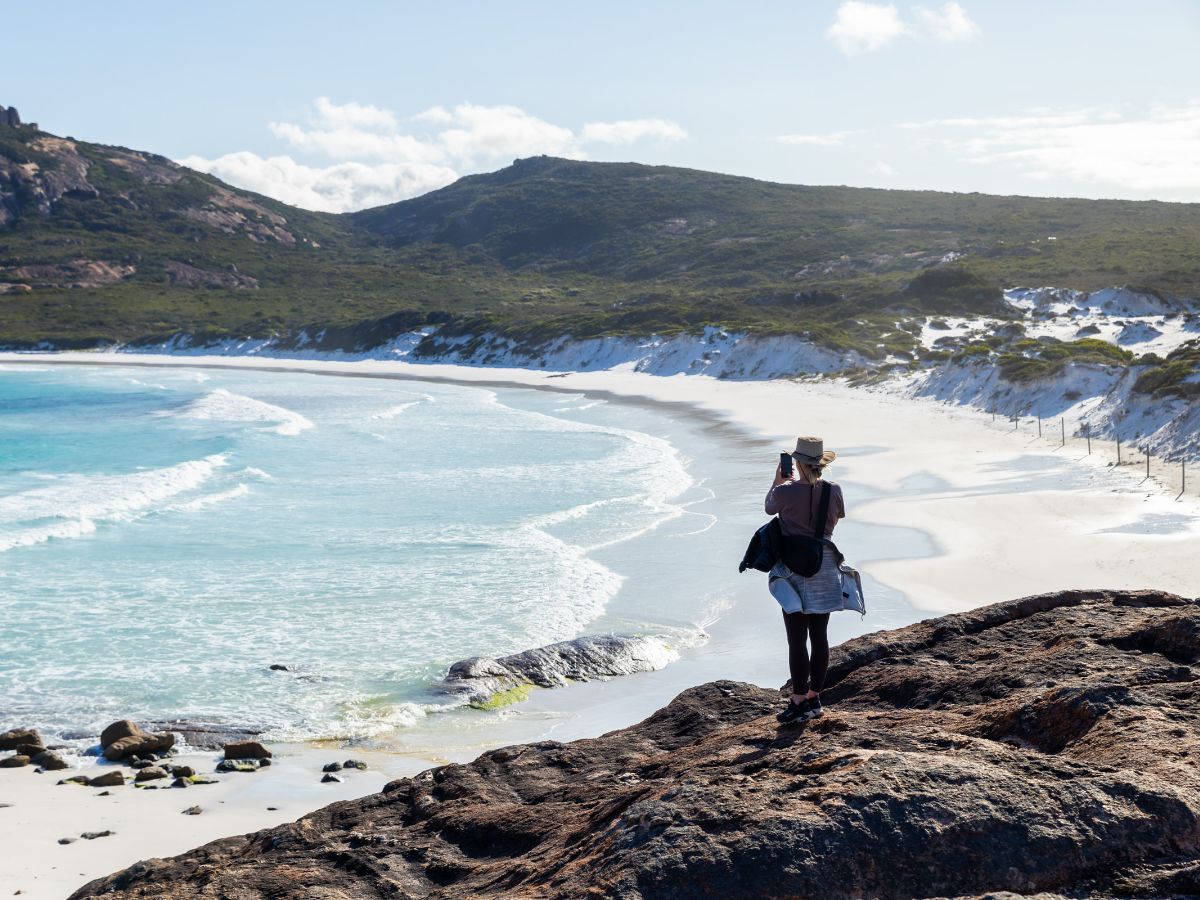
I used to get frustrated watching groups arrive at spectacular viewpoints and immediately reach for their cameras. The phones would come out before anyone had taken a breath. Before anyone had let the scale register. Before the place had any chance to do its work.
I’ve come to think about this differently now.
The impulse to photograph isn’t wrong. It’s a natural response to encountering beauty—a desire to hold onto something, to mark the moment, to share what we’re seeing. The problem isn’t the photo. It’s the sequence.
When we capture before we receive, we’re treating the place like a product we can consume. Something to acquire, process, and move on from. But a place isn’t a product. It’s more like a gift.
Gift psychology research has revealed something important about this distinction. When we receive a gift we actually value—when we’re present to it, appreciative of it—it evokes gratitude. And gratitude does something to the brain. It releases dopamine, oxytocin, and serotonin. It strengthens our sense of connection, both to the giver and to the world around us. It creates memories that persist.
When we consume something—buy it, use it, move on—the neurological response is different. Quicker. Shallower. More susceptible to hedonic adaptation, that tendency of the brain to return to baseline regardless of what we’ve acquired.
The Traveller State is what happens when you receive a place like a gift rather than consume it like a product. There’s appreciation. There’s presence. The experience encodes differently, it becomes a resource you carry with you, not content you’ve already processed and filed away.
So now, when groups reach a viewpoint, I give them a different sequence. First, we pause. We breathe. We let the nervous system register where we are. We give the place a chance to do its work on us. Then, if they want to photograph, they photograph. But they’re capturing something they’ve already received, not substituting the capture for the reception.
The photos they take after genuine arrival are different, too. Less about proving they were there. More about remembering what it felt like.
The Conditions for Transformation
The Traveller State doesn’t happen automatically. It requires certain conditions.
Movement helps. Walking through terrain does something that standing still doesn’t. Stanford research found that walking increases creative output by 60% compared to sitting—but outdoor walking on non-linear paths produced the highest results. Something about moving through a landscape, adapting to its contours, engages the brain differently than observing from a fixed point.
Side-by-side conversation helps. Walking alongside someone removes the confrontational geometry of face-to-face positioning. You’re equals moving in the same direction. Research on walk-and-talk therapy found that participants reported reduced social anxiety and deeper conversation when looking ahead rather than at each other. The reduced eye contact made it easier to be vulnerable.
Time helps. Not rushed time—dwelling time. The nervous system takes 20-30 minutes to begin its shift from activated to settled. Most tourists move through landscapes too quickly for anything to take root. They’re covering ground rather than travelling through it.
And challenge helps, counter-intuitively. Physical effort that demands presence. Terrain that requires attention. The body has to work before it can fully receive stillness. Challenge completes the stress cycle that modern life leaves perpetually open. It gives the nervous system evidence that the emergency is over.
Tourist Mode vs Traveller State
| Tourist Mode | Traveller State |
|---|---|
| Consume the destination | Receive the place like a gift |
| Check items off the list | Travel through the landscape, feeling its edges |
| Move quickly to maximise coverage | Move slowly enough to actually arrive |
| Capture for later proof | Let the experience encode deeply |
| Return to baseline within days | Build lasting psychological resources |
Place as Performance Variable
Place is the most underleveraged variable in human performance.
I make this claim deliberately, because I’ve watched what happens when you get it right. Teams that were stuck become unstuck. Individuals who were depleted find capacity they’d forgotten they had. Conversations that couldn’t happen in meeting rooms unfold naturally on ridgelines. Decisions that had been circling for months clarify in an afternoon.
This isn’t because nature is magical. It’s because environment shapes everything about what’s possible. A boardroom keeps people defended because the environment signals performance and evaluation. A gorge allows people to open because the environment signals safety and perspective. Different places create different conditions. Different conditions enable different outcomes.
Corporate teams spend enormous budgets selecting venues for offsites, then assume that simply being somewhere beautiful will do the work. It won’t. The place is the raw material. What transforms people is the journey through it—the pace, the sequence, the moments of challenge and stillness, the conversations that only happen when defences have dropped.
What holidays accidentally create in some people, some of the time, can be deliberately designed. That’s what I’ve spent a decade learning to do.
The research is clear: Creative problem-solving improves by 50% after four days of wilderness immersion. Workplace nature interventions reduce cortisol by 29% and burnout scores by 15%. Face-to-face interaction is 34 times more effective than email for building trust. The Traveller State creates conditions where cognition works properly, connection forms naturally, and capacity regenerates fully.
The Resource That Travels With You
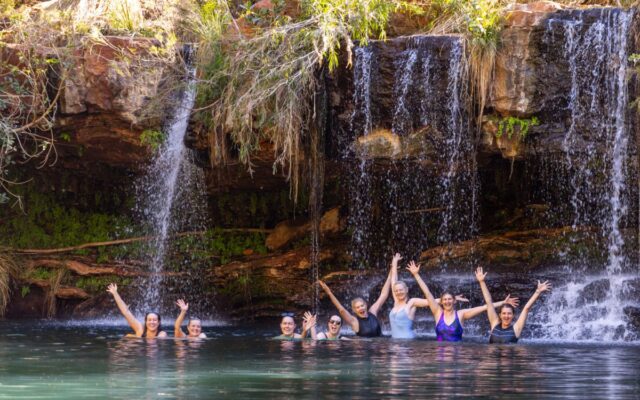
I think about a guest named Emma, who came on one of my Karijini experiences. She was a nurse. Quiet, a bit guarded, the way healthcare workers often are when they spend all their energy holding space for other people’s pain.
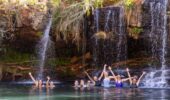
On the second day, we stopped at a place I know well. A rocky slab deep inside one of the gorges, warm from the morning sun, perfectly angled for lying back. I asked the group to rest there for a while.
Emma lay down on the rock and didn’t move for about twenty minutes.
Seven months later, she sent me a message. She’d been assigned to care for an overdose patient in the same bed space where her ex-husband had been brought after his own crisis. The trauma started surfacing. She closed her eyes, took herself back to that rock in Karijini. The temperature of the stone, the quality of light, the feeling of being held by something ancient, and her breathing returned to normal. She finished her shift.
That’s the Traveller State. Not just a pleasant experience in the moment. A psychological resource that travels with you, accessible months later, in conditions of extreme stress.
Emma didn’t just visit Karijini. She wasn’t a tourist checking off a destination. She received the place like a gift. She let it encode deeply. And when she needed it, it was there.
Going somewhere beautiful isn’t enough. It’s what happens inside that place that matters. The destination is the stage. The journey is the transformation.
The tourism industry excels at creating desire. At making people want to show up. What I’ve learned is how to design what happens after they arrive… How to create the conditions where showing up becomes genuine arrival, where destinations become resources, where travel changes people in ways that last.
The Traveller State is available to anyone, anywhere. But it doesn’t happen by accident. It requires slowing down when everything pushes toward speed. Receiving rather than consuming. Letting a place work on you before you work to capture it.
The wild places are waiting. They’ve always been waiting. The question is whether you’ll visit them as a tourist, or arrive as a traveller.
Kate · Founder of The Hike Collective
Your team’s next offsite doesn’t need a better destination. It needs a better journey.