24th June 2026
The best part of a winter hike is the part you can’t photograph
We hike, on the whole, as though it were a spectator sport. We photograph the view, name the lookout, and we come home and describe what we saw, as if seeing were the point of going.
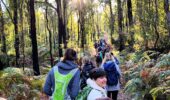
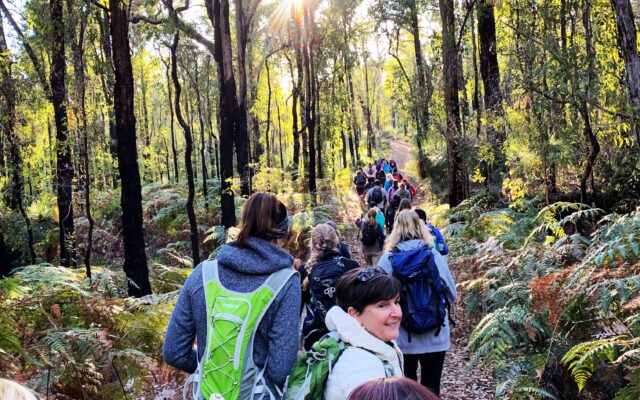
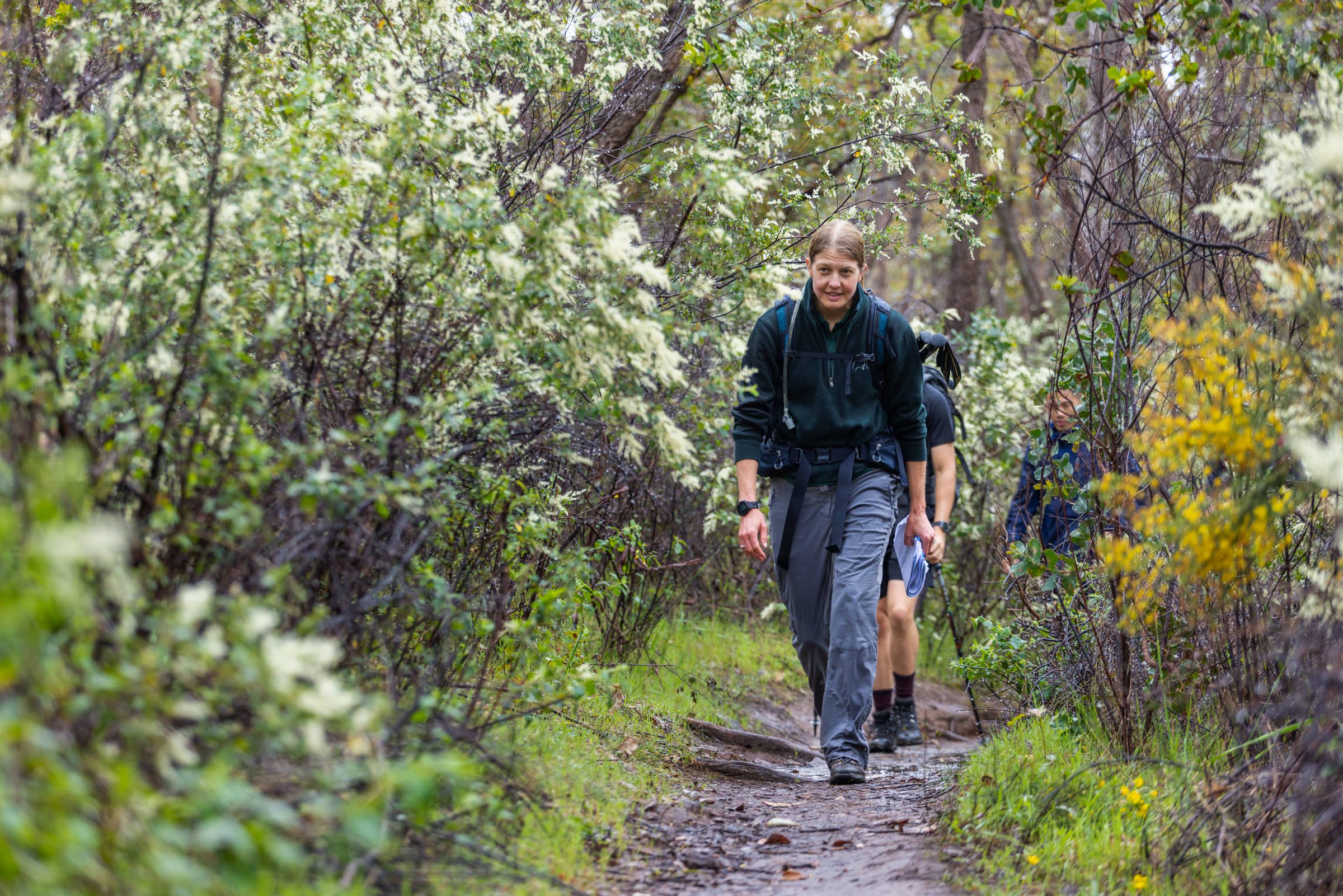
Then it rains in July. You walk into a jarrah forest in the Perth Hills, and something happens that has nothing to do with what you can see.
You smell it before you’ve decided to notice anything. The wet bark, crushed eucalyptus underfoot, and beneath all of it, that low mineral smell of rain landing on dry ground. (which has a name, by the way). In 1964, two Australian scientists at the CSIRO, Isabel Joy Bear and Richard Thomas, gave it one. Writing in the journal Nature, they called it petrichor: from the Greek for stone, and for the ichor that was said to run in the veins of the gods. A faintly absurd name for the smell of wet dirt, which has never been bettered.
The smell itself is largely one compound, geosmin, made by bacteria that live in their countless millions in the soil beneath your boots. A raindrop lands on dry ground and flattens. In the instant before it spreads, it traps a cushion of air, which rises through the drop as a column of tiny bubbles and bursts at the surface, throwing the scent upward as a fine mist. A single drop becomes a perfume.
And we are extraordinarily good at smelling it. The human nose detects geosmin at a few parts per trillion. By some measures we register the arrival of rain more keenly than a shark registers blood. Our ancestors were not scanning the horizon for a nice view; they were looking for water, and the smell of it landing on dry ground was the oldest good news there was. Your body has not forgotten this, and it still leans towards the smell of rain the way a plant leans towards light.
Then there is the bush itself.
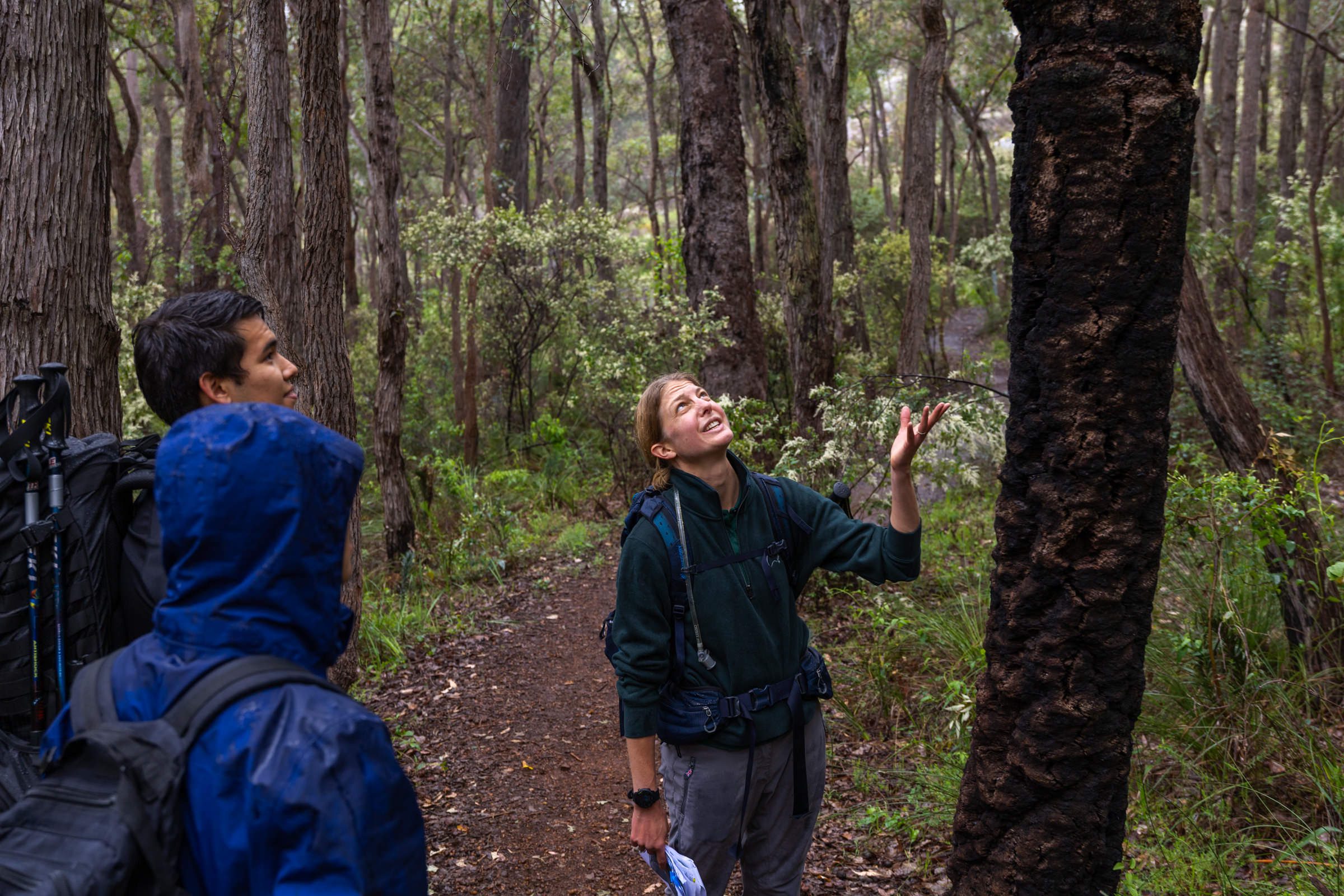
Eucalypts are among the most aromatic plants alive. On a hot day the oils they release rise and scatter before they can gather. Winter changes the arrangement when cool, damp air holds the oils low and close to the ground. Rain bruises the leaf litter and the wet bark, and the forest lets go of everything it has been holding, all at once.
These airborne compounds have a name. They are called phytoncides, and they are not merely pleasant company. In Japan, where walking in forests is taken seriously enough to be studied in hospitals, researchers have found that breathing them in changes the body in ways you can measure: cortisol falls, blood pressure drops, and the immune system’s natural killer cells rise. In some studies, still raised a full month after two days among the trees.
And this is the strange privilege of smell. Of all the senses, it is the only one wired directly into the oldest part of the brain. Sight, sound and touch are routed first through a kind of switchboard, processed, considered, held up for inspection. Smell does none of this. It goes straight to the amygdala and the hippocampus, the seats of feeling and memory, and arrives before the rational mind has been told there is anything to discuss.
Which is why a single smell can return you to a place you have not stood in for 30 years and why, on the trail, scent does the one thing a view cannot. A view asks to be admired. It waits for you to turn and look. The smell of wet eucalyptus asks for nothing. It arrives unannounced and lowers your pace.
All of which is the argument for winter, and it is not the one most people expect.
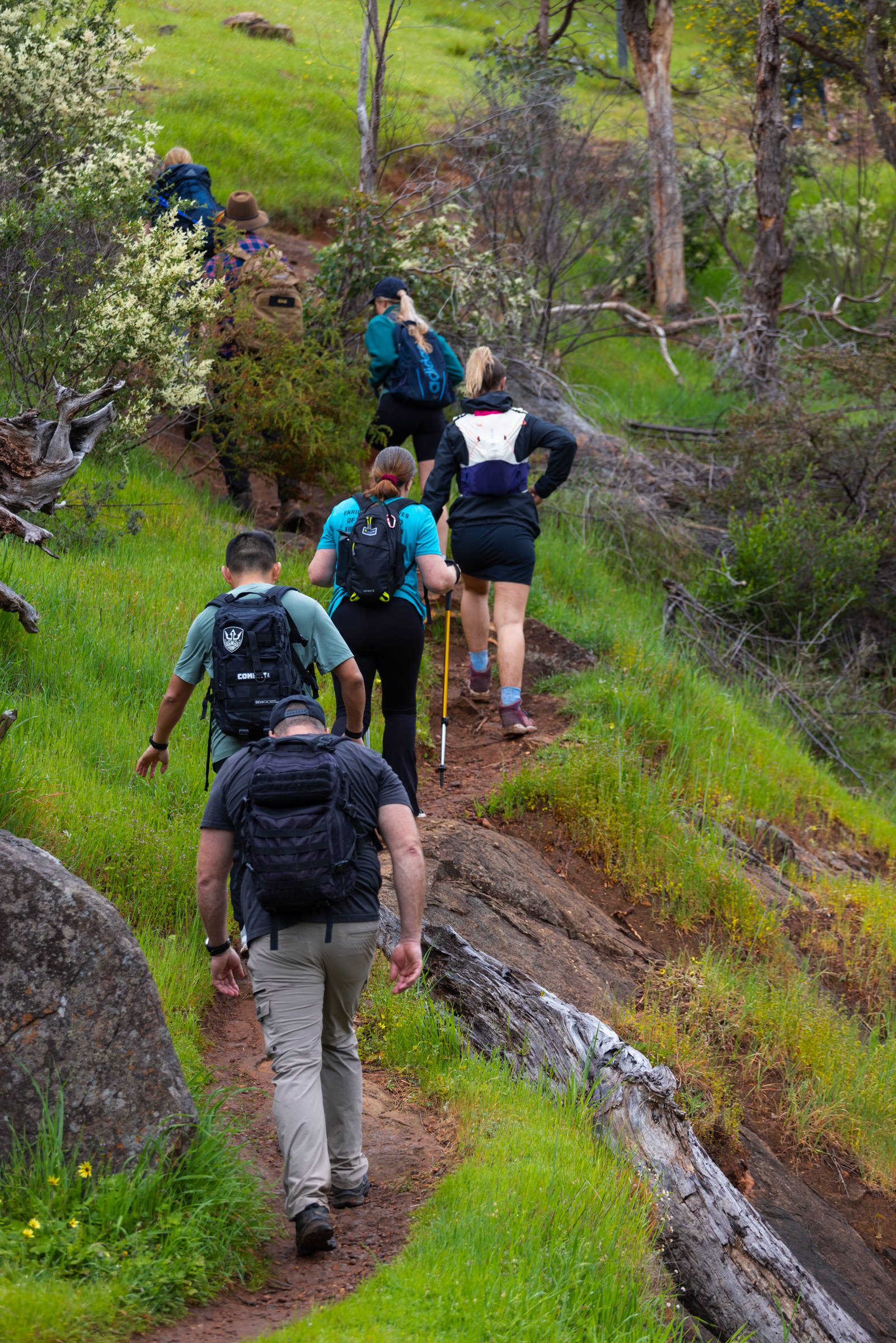
We treat the season as something to be endured, the one where the trails empty out and sensible people stay home. But the bush in winter is doing its most generous work: wet, green, thick with scent, and almost entirely free of other people. You do not walk in July in spite of the weather, you walk because of it.
In winter, the most powerful thing about a place is the part of it you will never photograph. You will come home and describe the view, because the view is what you have words for. But the thing that actually moved something, that slipped past your thinking and changed your state, came in through your nose.