11th February 2026
The Hike We Named Wrong (And Why That Tells You Everything)
Two peaks. Three summits. And the one that matters most is the one you already think you’ve finished.
I named our most popular Perth Hills hike wrong, and I’ve known about it for years.
It’s called Two Peaks. It traverses two mountains along one of the finest sections of the Bibbulmun Track: Mt Vincent and Mt Cuthbert. Two peaks, as advertised. Except the route is an out-and-back, which means you summit Mt Vincent on the way out, descend into the valley, summit Mt Cuthbert, turn around, and then summit Mt Vincent again on the way home. Two peaks, three summits. The maths doesn’t work. I haven’t changed the name. And I’m increasingly convinced the naming error is the most honest thing about the whole experience.
Because the third summit is the most important one, and it only works if you don’t see it coming.
A Mountain Fifty Metres From a Highway
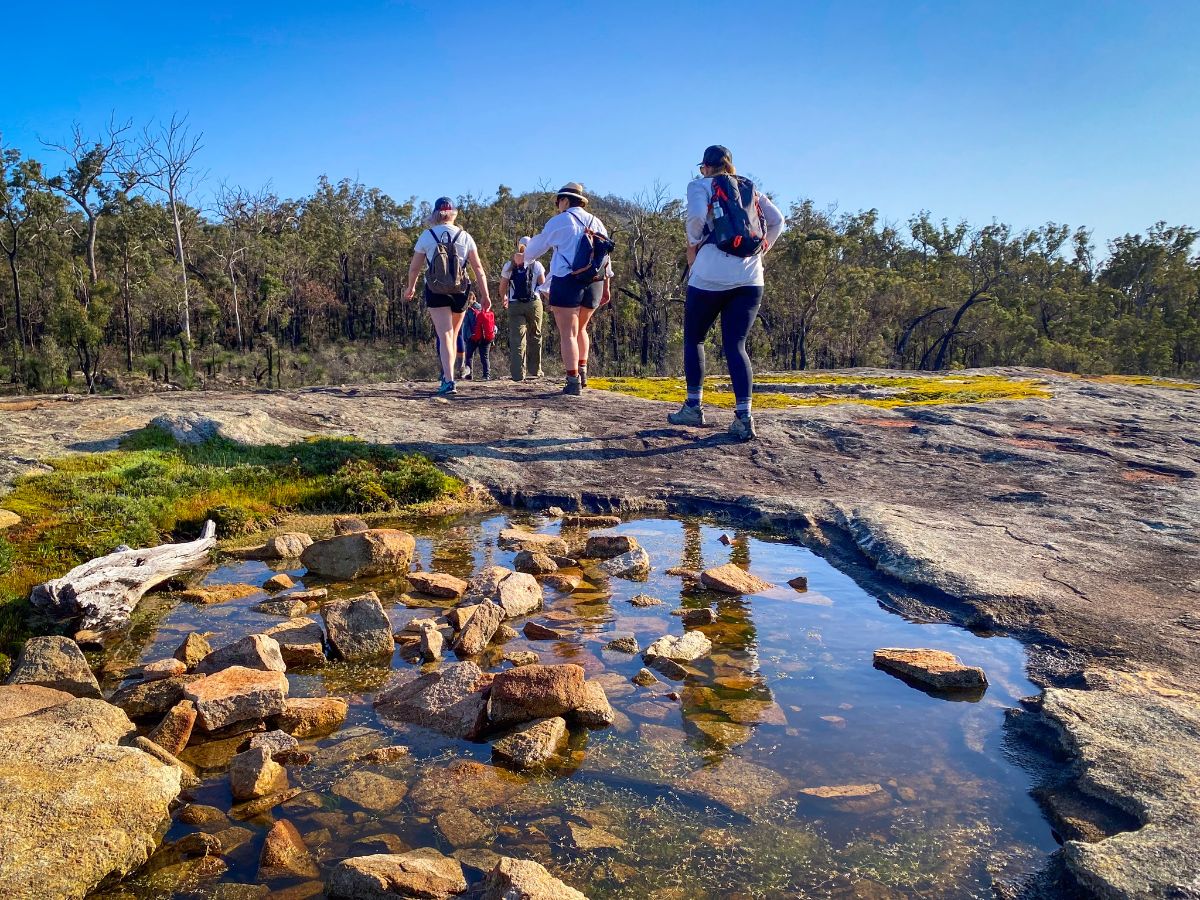
The starting point is Sullivan Rock, a dramatic granite whaleback sitting roughly fifty metres off Albany Highway, about an hour south of Perth. Thousands of people drive past it every day at 110 kilometres an hour, and almost none of them know it’s there. There’s a small car park. A modest sign and no fanfare. You cross the road, scramble over the rock, and suddenly you’re standing on a granite dome looking out over unbroken jarrah forest in every direction, wondering how something this beautiful has been hiding in plain sight behind the noise barrier of a regional highway.
This is, incidentally, an excellent metaphor for almost everything I’ve learned about place over the past decade. The good stuff is rarely where you’d expect it. And the places that change people most profoundly tend to be the ones that don’t bother advertising.
The Architecture of the Route
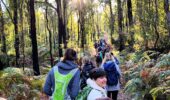
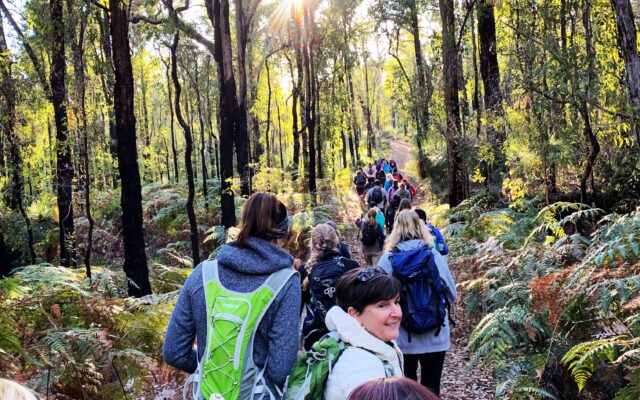
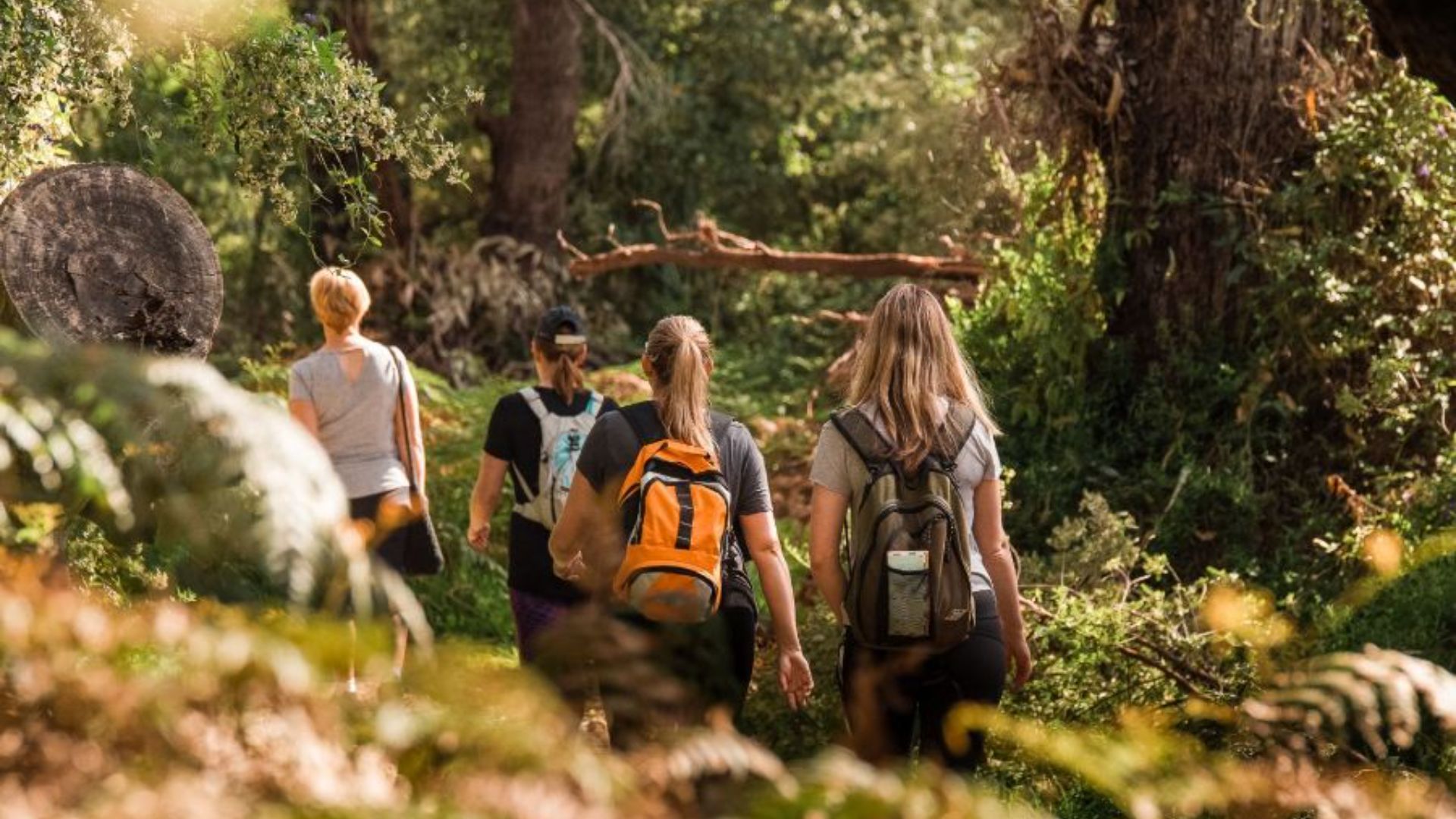
From Sullivan Rock, you pick up the yellow Waugal trail markers and begin the climb through marri and jarrah forest toward the summit of Mt Vincent. The forest here is dense and generous, the kind of canopy that makes you realise how noisy your default mental state actually is, mostly because the contrast becomes impossible to ignore once the trees close in overhead.
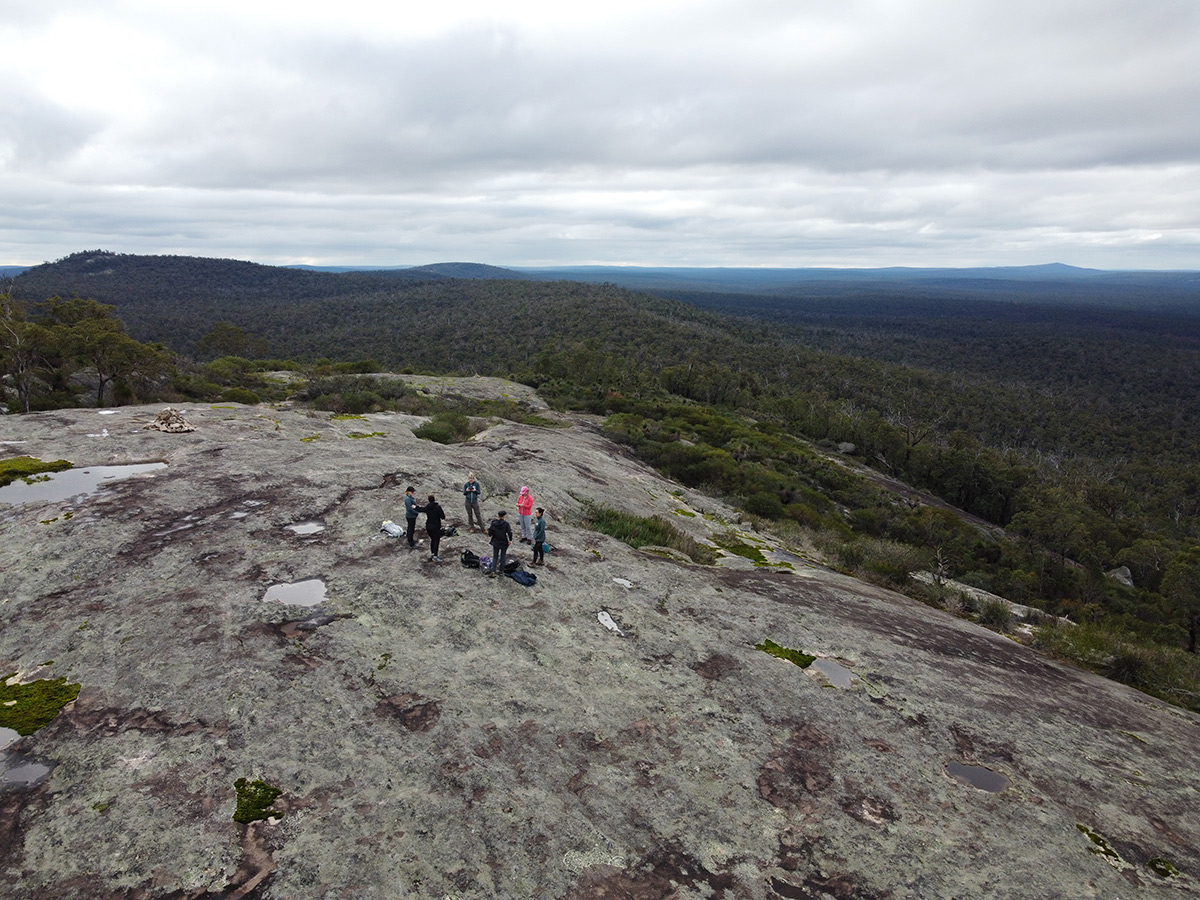
The summit of Mt Vincent opens onto exposed granite marked by a cairn that resembles a natural roundabout. On a clear day, you can see nothing but unbroken bushland to the horizon in every direction. No buildings. No roads. No evidence that anyone has ever tried to optimise this particular piece of country for quarterly returns. If you’re the kind of person who finds that view unsettling rather than liberating, the hike has already started doing its work.
You then descend into the valley between the two peaks, through a stretch of she-oak forest that, in fog, takes on a genuinely otherworldly quality. The she-oak needles carpet the forest floor in amber, the undergrowth thins out, and the whole place develops the sort of atmospheric moodiness that filmmakers spend millions trying to fabricate. Nobody has fabricated this. It simply is.
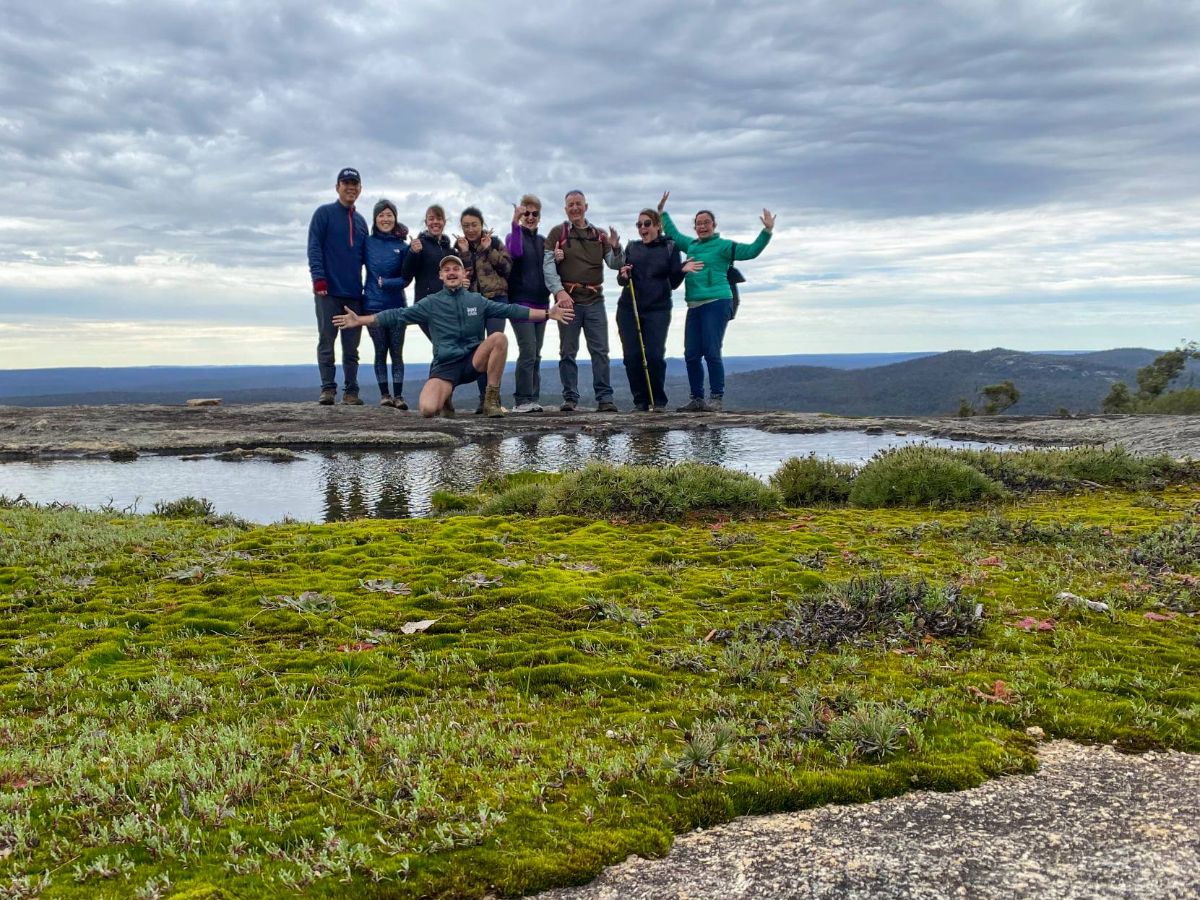
Mt Cuthbert sits at the other end of the valley. The climb is steeper, the exposed granite more dramatic, and the summit delivers that particular kind of 360-degree panoramic view that makes people reflexively reach for their phones, which is understandable but also slightly beside the point. Mossy patches, and silence that isn’t actually silent at all but feels like it because your internal monologue has finally shut up.
This is where we stop. This is where we eat. On our hosted experience, there’s a summit treat waiting. I won’t reveal the specifics, but I will say that altitude improves the taste of everything by a factor that science hasn’t adequately measured, probably because no one has applied for the grant.
And then you turn around.
The Summit Nobody Signed Up For
The return journey is where Two Peaks earns its reputation, and where most trail descriptions become curiously vague.
Because you have to go back over Mt Vincent. The mountain you’ve already climbed. The one your legs have already filed under “completed” and your brain has categorised as known territory. Your quads have written a strongly worded letter to management. Your planning mind, having already catalogued the view from the top, considers the second ascent a redundancy.
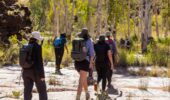
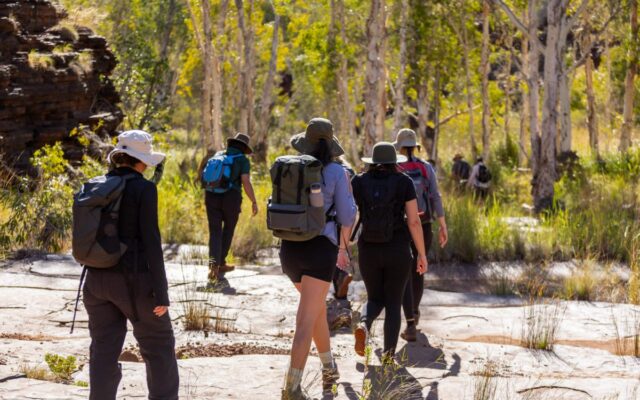
And yet the second time up Mt Vincent is a completely different experience. Not because the mountain has changed (granite operates on geological timescales and couldn’t care less about your itinerary) but because you have. You’ve been walking for at least three hours. You’ve descended into the valley twice. Your domestic state, that buzzy, planning, email-composing mode you arrived in, has been thoroughly dismantled by the accumulated effect of effort, forest, and the total absence of phone signal.
What you get on the third summit isn’t the view. You already have the view. What you get is the thing that only arrives after struggle, after the body has used up its resistance and the mind has run out of things to commentate on.
You get quiet. Not silence but the internal kind of quiet. The kind where you stop narrating your own experience and simply find yourself inside of it.
That’s the wild state. And it doesn’t arrive on summit one or summit two. It arrives on summit three, the one that looked like a repeat, the one your brain tried to file as unnecessary. Turns out the unnecessary bit was the whole point.
Why the Name Stays
A more geographically honest company would rename this hike Three Summits. A more marketable company would call it the Triple Summit Challenge and sell branded headbands. But the entire design of this trail depends on the fact that the best part is the part you didn’t anticipate, the part that only happens because you committed to the route without fully understanding what it would ask of you.
Which, if you think about it, is also how most of the worthwhile things in life tend to operate.
So it stays Two Peaks. Come for the two mountains you were promised. Stay for the summit you weren’t.
The Practical Bits
Distance: 10km out and back along the Bibbulmun Track, Sullivan Rock to Mt Cuthbert
Elevation: 465 metres of gain, with sections grading up to 12%
Time: Approximately four to four and a half hours
Difficulty: Intermediate. You’ll want proper shoes and a functioning relationship with your cardiovascular system.
Getting there: Sullivan Rock car park, Albany Highway, about an hour south of Perth. You’ll drive right past it if you’re not looking. That’s part of its charm.
What to bring: Two litres of water (minimum), snacks for the summit, closed shoes with grip, and the willingness to climb the same mountain twice without lodging a formal complaint.
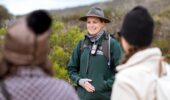
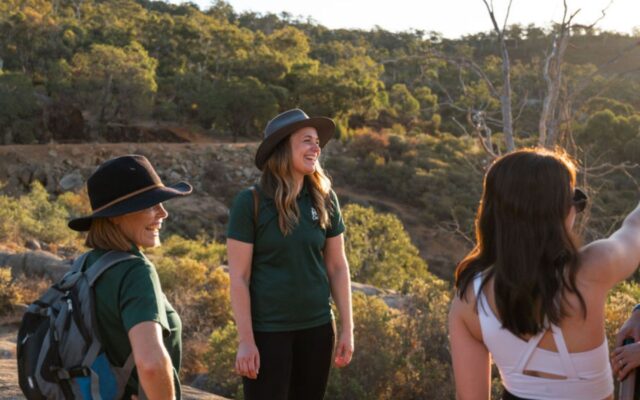
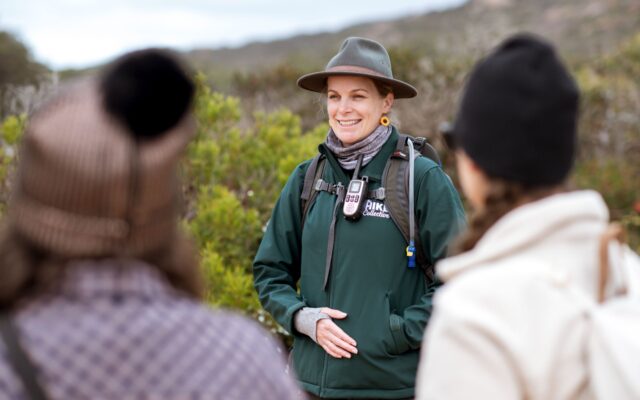
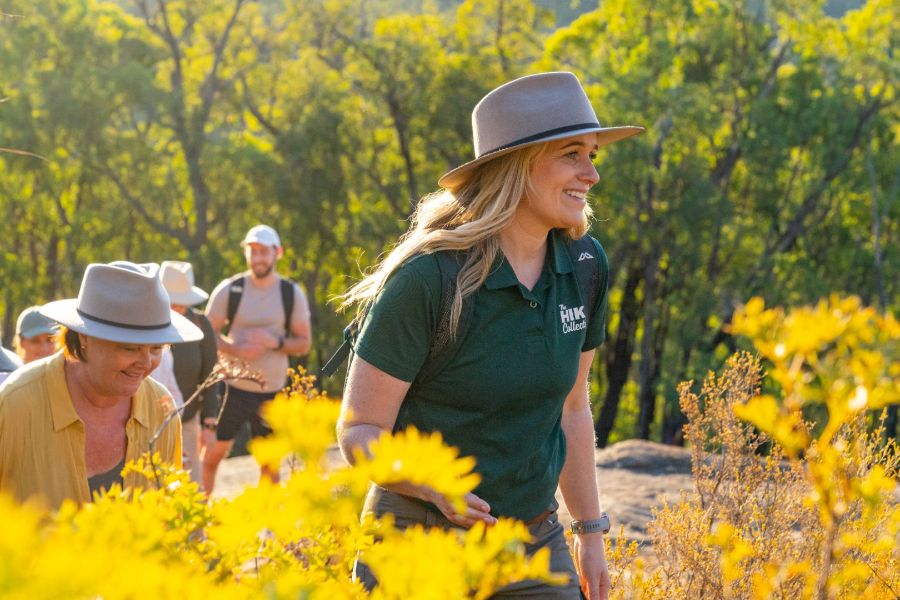
The guided version: We run this as a hosted experience with The Hike Collective. Summit treats, stories about the country you’re walking through, rare Darling Range ghost gum spotting, and someone who’ll make sure you don’t accidentally veer off toward Mt Cooke, which is a different hike entirely and a mistake that has been made more than once by people who shall remain nameless.
Book the Two Peaks Experience →
The Hike Collective has been guiding people through wild places across Western Australia since 2016. We’ve won enough tourism awards to wallpaper a small bathroom, but the thing we’re most proud of is that over 25,000 people have walked with us, and most of them came back different. Not because we told them anything particularly clever. Because we put them in the right place, long enough for their biology to notice.