7th July 2026
How to Read a Wildflower: A Beginner’s Guide to Looking Properly
The first time you walk through a Western Australian spring, you see colour – a glorious, overwhelming, undifferentiated wash of it. The tenth time, something has changed. You start seeing sentences. Because the bush, it turns out, is not a painting. It is a text, and it can be read. You do not need a botany degree to read it. You need to learn a small handful of plant families, and one slightly heretical idea that separates the people who can identify wildflowers from the people who merely admire them.
The heretical idea is this: colour is the first thing you notice and the last thing you should trust.
It feels wrong, because colour is so obviously there. But colour is the least reliable clue in the entire bush. A dozen wholly unrelated plants can all flower the same shade of pink, for the same dull commercial reason — pink happens to attract the pollinator they’re all courting. Colour tells you who a flower is advertising to. It tells you almost nothing about who the flower is. For that, you have to look past the colour to the thing colour is forever distracting you from: structure. The shape of the flower, the arrangement of its parts, the cut of a leaf. Learn to see structure, and the reunion suddenly fills with recognisable faces.
The families that do the heavy lifting
Six or seven plant families account for the overwhelming majority of what you’ll meet on a WA walk. Learn to recognise these on sight, and you can place most of a hillside without opening a book.
The peas (Fabaceae). Look for the unmistakable “egg and bacon” flower: a broad upright petal at the back like a raised banner, two side petals held out like wings, and a fused lower pair curled into a little keel. So many WA peas wear yellow-and-red that it functions almost as a family uniform. And here’s the twist for the beginner’s ego… the wattles are peas too. They’ve simply dispensed with the elaborate flower and gone all-in on those fluffy golden pom-poms, which are not petals at all but a great crowd of stamens.
The myrtles (Myrtaceae). The grand Australian family – the eucalypts, the bottlebrushes, and a legion of wildflowers besides. The giveaway is often a boss of many long stamens giving the flower a soft, brushed, fibre-optic look, plus aromatic leaves that release oil and scent when you crush one between your fingers. The feather flowers and the mountain bells are myrtles.
The proteas (Proteaceae). Our banksias, grevilleas, hakeas and smokebushes. Think tubular flowers packed tightly into dense heads, spikes or clusters – robust, generous with nectar, and frequently built for a bird rather than an insect. If a flower looks engineered to be perched on and drunk from, this is very often the family.
The daisies (Asteraceae). The everlastings. Here lies one of the best-kept secrets in botany, hidden in plain sight: what you take for a single daisy “flower” is nothing of the sort. It is a tight-packed community of dozens or hundreds of tiny individual flowers, crowded into one head that impersonates a single large bloom – a hundred modest flowers pooling their advertising budget to buy one billboard no insect can miss. And those papery “petals” that make everlastings everlasting? Not petals either, but modified leaves called bracts, dry and long-lasting by design.
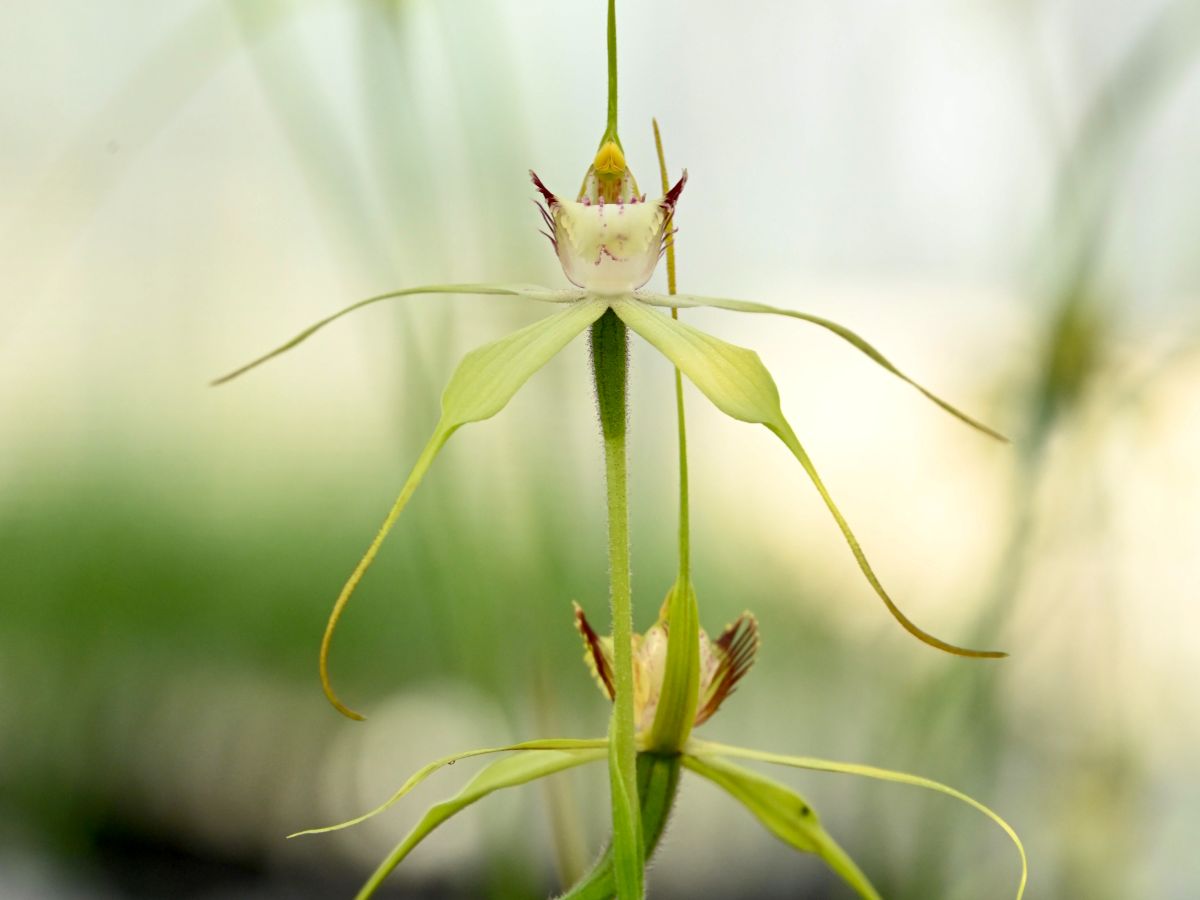
The orchids (Orchidaceae). Always distinctive once your eye is in: three outer sepals, two upper petals, and then one lower petal gone gloriously rogue, the labellum, remade into a landing strip, a lure, or an outright trap. The rule of thumb: if a flower looks like it is quietly up to something, it’s almost certainly an orchid.
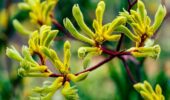
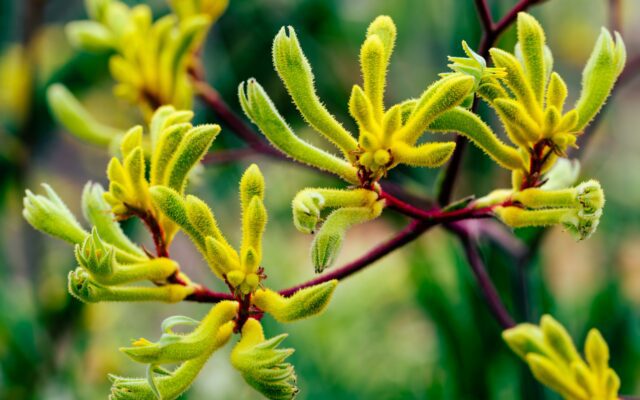
Round the set out with the kangaroo paw family (Haemodoraceae) — unmistakable once you’ve handled those woolly, tubular paws, and the leschenaultia family (Goodeniaceae), home to the fan flowers, the electric-blue leschenaultias, and the famous wreath flower.
The four-question method
Next time you kneel to a flower you can’t name, resist the urge to reach for colour. Ask four questions, in this order, and let them walk you down the family tree:
- What shape is the flower? Pea-like? Tubular? A daisy head? A brush of stamens? An orchid’s lopsided architecture? This one question alone usually delivers you to a family.
- How are the flowers arranged? One to a stem, or gathered into a spike, a head, a cluster?
- What do the leaves look like? Needle-fine, broad, hairy, prickly, aromatic? Leaves are frequently more diagnostic than the flower — and unlike flowers, they’re there all year.
- What is the plant’s habit, and where is it standing? A ground-hugging annual, a knee-high shrub, a small tree? In sand, gravel, clay, or clinging to granite?
Four questions, and you’ve travelled from “some pink thing” to “a pea, growing as a low shrub in white sand, with fine needle leaves” — which is a genuinely useful place to be, and often enough to nail it.
A flower that fights back
A word of encouragement for the newly obsessed: the closer you look, the weirder and better it gets. Kneel to the little trigger plants (Stylidium), for instance – modest pink and white flowers scattered through the bush – and you may, if you’re lucky and gentle, watch one move. Brushed by a visiting insect, the flower’s fused column snaps across in a fraction of a second, slapping a dab of pollen onto the insect’s back before it can escape. It is one of the fastest movements in the plant kingdom, and most people walk straight over it for a lifetime without ever knowing the bush can throw a punch.
The confusions everyone falls for
A few honest warnings, so you can skip the mistakes the rest of us made. The everlastings will torment you: many species look near-identical to the untrained eye, and telling one pink paper daisy from another often comes down to fiddly details of the centre and the bracts. Don’t feel foolish for lumping them at first – even keen amateurs cheerfully stop at “a pink everlasting” and walk on. The spider orchids are worse: with well over a hundred species in the state, many separated by subtleties a beginner has no earthly hope of catching, even experts sometimes need the flower in hand and a technical key to be certain. And you’ll meet the same plant under two different names — Banksia and the older Dryandra — simply because the botanists reclassified them and not every book, sign or local has caught up.
The lesson here is not to be discouraged but to relax. Getting a flower to its family — pea, daisy, orchid, protea — is the useful and satisfying skill, and it is very learnable in a season. Pinning down the exact species is a lifetime’s pastime, and nobody, however eminent, has ever finished it. The bush keeps some of its secrets on purpose.
The tools that actually help
- FloraBase, the Western Australian Herbarium’s free database, is the authoritative source — searchable by flower colour, region and habitat, and maintained by the people who do the official counting.
- iNaturalist, a free app, lets you photograph a flower and get an identification suggestion plus a genuine second opinion from a community of naturalists worldwide. It is the single fastest way to learn on the move, and every record you add is real scientific data.
- A good field guide in the pack never goes amiss — Simon Nevill’s Guide to the Wildflowers of Western Australia is a well-thumbed standard.
One rule that outranks all the others
As your eye sharpens, you’ll be tempted to get closer still, to pick a flower to examine it properly, or to carry one home. Please don’t. Picking native wildflowers on public land in Western Australia isn’t merely poor manners; it is against the law, and for sound reasons. Many of these plants are rarer and more fragile than they look, some depend on partnerships in the soil that a picked flower severs forever, and a photograph outlasts a picked flower by decades anyway.
Take only pictures. Leave the flower standing for the next walker to puzzle over, and for the bee that is, at this very moment, on its way.