22nd July 2026
Wild For a While
I grew up believing that the point of a body was performance.
Dressage will teach you that, if you let it, and I let it completely. I moved to Germany young, into a world where your worth arrives as marks out of ten from people whose job is to find the flaw. I learned to sit stiller than feels human. I learned that precision is a language, that discipline is love expressed sideways, and that there is no ceiling on how much of yourself you can spend chasing a number.
What nobody in that world taught me, and what I’m not sure anyone in that world knew, was anything at all about restoration. Effort had a whole vocabulary. Recovery didn’t have a word. You were either producing or you were wasting time, and I carried that arithmetic out of the sport and into the rest of my life, where it did exactly the damage you’d expect. It took me years to understand what it had cost, mostly because the cost was quiet. My attention narrowed, my friendships narrowed, and somewhere in there the version of me I liked best went missing, and I was too busy to recognise.
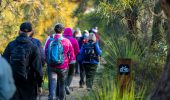
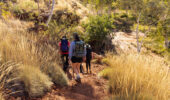
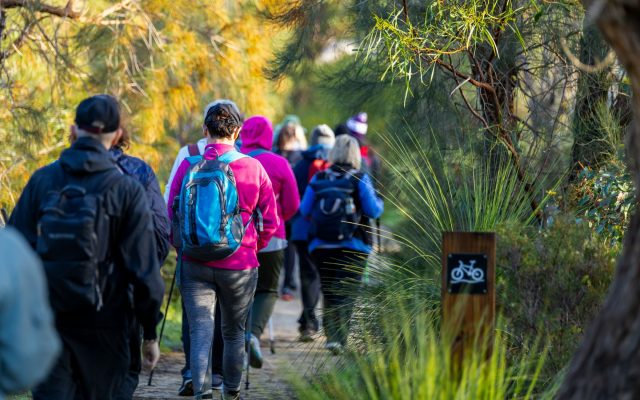
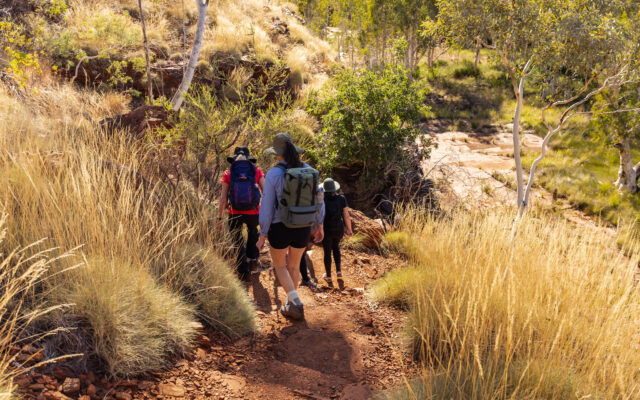
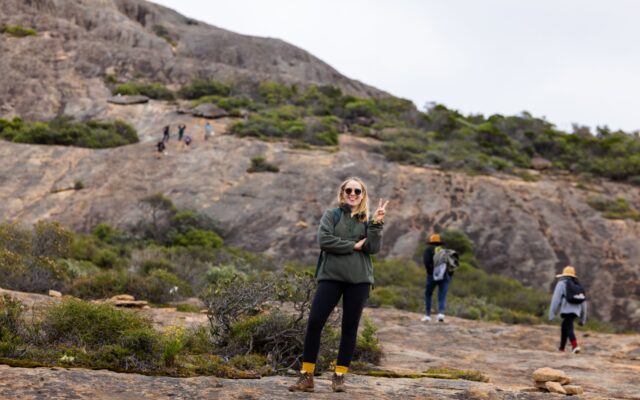
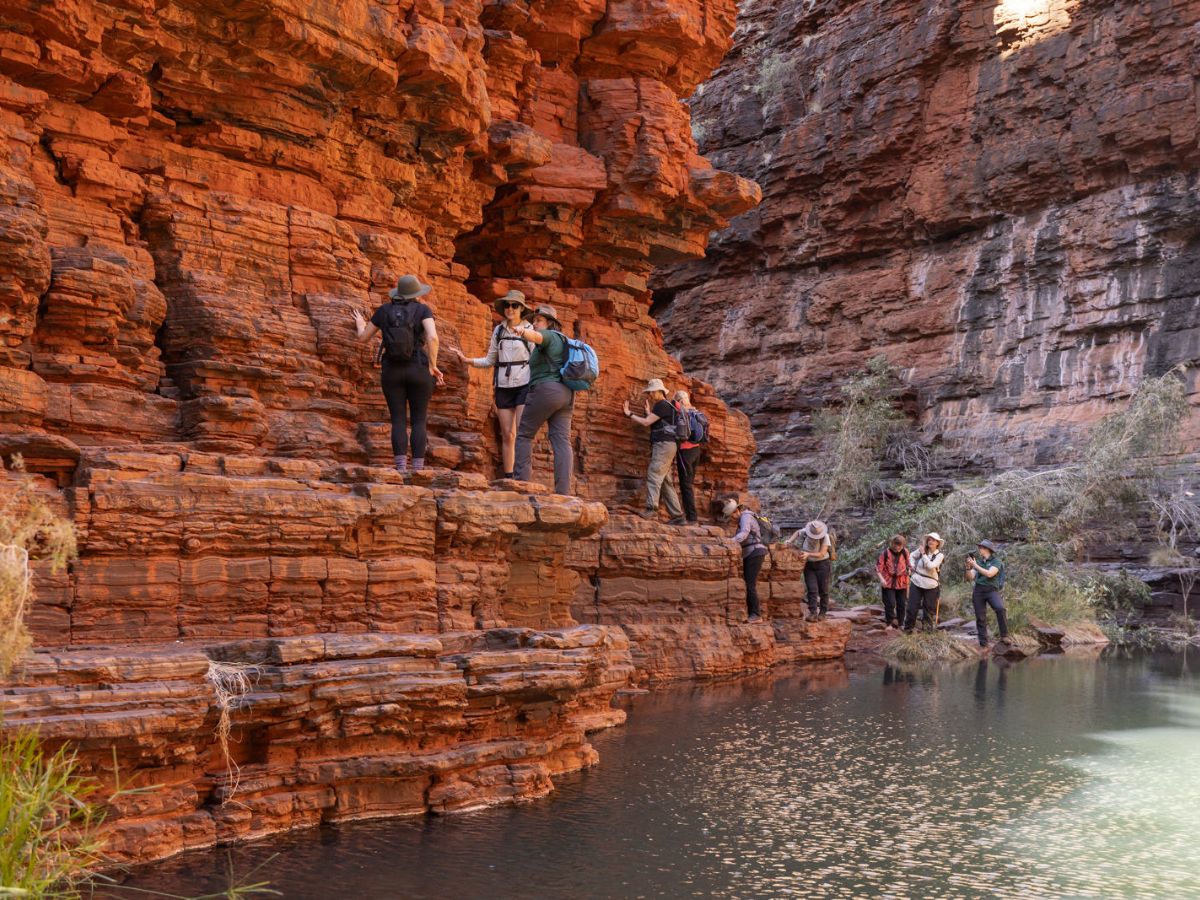
So when I say the first walk was for me, I mean it precisely. One Saturday morning I put up a Facebook post to head on trail with any friends and family who wanted to join me, and a question … A what-if with a start time. What if I just see who comes walking? I could not have told you then why I needed it. I have since learned that this is normal. Half the people who have ever walked beside me couldn’t tell you why they came either. Something older than reasons brought them, the same way it brought me.
People came that day in 2016, and they kept coming. And that is when I started noticing the thing this whole body of work grew out of, the thing I have now witnessed more times than I could ever count.
Around the second hour, people change.
The talkers go quiet, and the quiet ones start telling the truth. A woman who had barely spoken since the trailhead stopped at a lookout once and told me about a grief her own family hadn’t heard yet. She wasn’t distressed. She sounded, if anything, relieved, like someone finally putting down bags she’d been pretending weren’t heavy. I remember thinking: I didn’t do that. The walk didn’t even do that, exactly. Something here did that. And then I remember thinking the question that has since organised my entire life:
What happens to us when we’re wild for a while?
For a long time my answers were guesses. Exercise, maybe. Endorphins. Perhaps I was just easy to talk to. I was raised on scoreboards, so eventually I did what people like me do when a feeling won’t leave them alone: I went looking for data, half-hoping the data would be complicated enough to feel serious.
It wasn’t complicated. It was worse than complicated. It was waiting.
There is a scientific literature that describes, with instruments, what I had been watching with my eyes. Your nervous system is old, shaped by open sky, moving water, firelight, other people close by, and it has never stopped responding to those things, whether or not you believe in any of this. Put a human in a wild place and stress physiology settles; the researchers have the cortisol curves. The frayed, over-spent kind of attention — the kind I had burned through years of — recovers in environments that hold it without demanding anything of it. The literature calls this soft fascination, which I find almost unbearably lovely as a phrase, because it is also a fair description of how I have felt on every trail of my life.
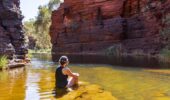
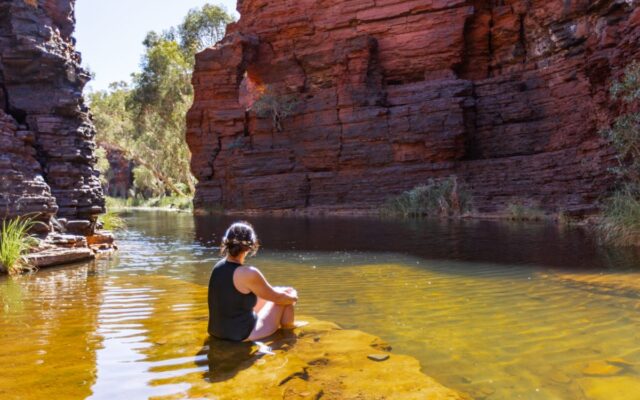
But the finding that undid me was the one about awe. Stand a human under something vast, like a gorge wall, a night sky, a horizon with no buildings on it, and the brain’s self-referential chatter goes quiet. Measurably. And people who have just felt awe behave differently: less defended, less self-absorbed, more generous toward the strangers standing next to them.
Read that again slowly, because it took me a while. The wild doesn’t just calm us. It turns us toward each other. The second hour had an explanation all along. Guardedness is expensive, and out there, under all that sky, nobody can afford it anymore, and what’s left when the guarding stops is the thing we were starving for in the first place.
I had spent years watching strangers become friends at an impossible speed and calling it magic.
The thing that I have come to believe is following, and I want to be careful with it, because I hold it the way you should hold anything you can’t fully prove yet.
We talk about loneliness, burnout and disconnection as though they are three different illnesses with three different aisles in the pharmacy. I no longer think they are. I think they are one condition presenting three ways. What happens to a wild-built creature that lives its entire life indoors. I have two names for the states I watch humans move between. The Tame State: attention frayed, stress ambient, the inner monologue running its tight little loop under artificial light. It is a rational adaptation to an irrational habitat. And the Wild State: what surfaces when you put a person somewhere their biology recognises, for long enough for the recognition to register. Attention widens, the loop quietens and strangers become easy. It is not an epiphany and it is not a retreat-brochure promise. It is closer to a factory setting, restored.
The longest study of human life ever conducted ran for eighty-five years and arrived at a finding so plain it’s almost embarrassing: nothing predicts our health and our happiness like the quality of our relationships. Not wealth. Not achievement. Not the numbers I once traded my whole self for. Relationships. And the places where relationships form fastest, where I have watched them form, over and over, between a trailhead and a lookout, are wild ones.
So the belief, stated as gently as I can: what if we have been treating nature as scenery, when it was the intervention all along? The reward after the real work. The backdrop for the photo. Filed under leisure, while we medicate the symptoms of its absence one prescription at a time.
I don’t say that with certainty. I say it with a career’s worth of second hours behind me, and a growing stack of research that keeps refusing to disagree.
The girl in Germany believed the point of a body was performance. It has taken me most of a life to learn what I’d now tell her: the point of a body is connection. To itself, to other people, to the ground it’s standing on, and all three, it turns out, need the same thing.
I still don’t have the whole answer to my question. These notes are where I look for it: what I’m witnessing, what the research says, and what I can’t stop asking.
But I’ll tell you what I know for certain, and it’s the same thing I’d tell you at the trailhead.
You might just be a wild thing who’s been indoors too long.
— Kate