8th August 2026
The Wildflower Capital of the World (and Why That Isn’t Marketing)
Every spring, Western Australia makes a boast that ought to embarrass it. The greatest wildflower show on Earth. It has the ring of a slogan invented over a lukewarm coffee by someone with a deadline. So let’s treat it as a hypothesis, and try to disprove it. The trouble is, the closer you look, the more you realise the slogan was being modest.
Consider the raw arithmetic. The Western Australian Herbarium, the people whose actual job is to count these things, has catalogued something in the order of 12,000 kinds of native plant across the state. Twelve thousand. For scale: the entire British Isles, after millennia of doting botanical attention, musters around 1,500. We have eight British Isles’ worth of flora, and most of it flowers in the same three months.
But the total is not the astonishing part. The astonishing part is how much of it belongs to nobody else.
The garden that grows nowhere else
Botanists have a cold, precise word for a species found in one place and one place only: endemic. In most of the world, endemism is a rarity worth a plaque: a lonely pine on a Mediterranean cliff, a violet clinging to a single Alpine ledge. It is the exception that proves how promiscuously plants usually spread.
In the south-western corner of this state, endemism is not the exception. It is the house style. Across the region that runs roughly from Shark Bay down to Esperance grow about 8,000 native plant species, and close to half of them exist nowhere else on the planet. Not in Sydney. Not in South Africa. Not in any glasshouse or arboretum on Earth that hasn’t imported them. Here, or nowhere.
This is why the South West is one of just 36 places on the planet formally recognised as a global biodiversity hotspot, a designation you cannot lobby your way into. To qualify, a region must harbour at least 1,500 plant species found nowhere else, and must already have lost seventy per cent of its original habitat. It is, in other words, a list of the world’s most irreplaceable and most imperilled ecosystems in the same breath. We picture such places as dripping equatorial rainforest. One of them is our own dry, pale, sun-hammered sandplain, a corner of the country most Australians fly over on the way to somewhere they consider more interesting.
And the counting isn’t finished. For much of the twentieth century, botanists here were naming new species at an average clip of roughly one a week during the great survey decades, and around half of all the plants currently known from the region have been formally described only since 1970. Somewhere in the bush this weekend, in all likelihood, is a flower that science has not yet got round to naming.
The paradox at the root of it
Now to the question that ought to have been nagging at you. Why here? Why this flat, ancient, unpromising quarter of the continent, rather than somewhere lush?
Here is the answer, and it is so counterintuitive it borders on a riddle: we have the richest flora on Earth largely because our soil is among the poorest on Earth.
Most of the South West rests on soils so old and so leached that they have almost nothing left to give. Phosphorus, the nutrient a plant most craves and can least improvise without, is desperately, chronically scarce. On rich young ground, a few fast, greedy species bolt upward, hog the light, and shoulder everyone else into the shade; fertility, perversely, breeds monotony. On our starved sands, no plant can grow fast enough or greedily enough to win that way. And so, over unimaginable stretches of time, the competition turned instead to specialisation: each species carving out an ever narrower niche, an ever more particular trick for wringing a living from nothing. Ten thousand different answers to the single question of how to survive on almost nothing at all.
Abundance, it turns out, is a child of scarcity.
To this recipe, add stillness. There have been no ice ages here to scrape the country bare, no recent volcanoes, no continental upheaval for an enormous span of time. While much of the world was being ground down and reshaped by advancing and retreating ice, the South West simply sat in the sun and got on with the slow business of evolution, undisturbed, for millions upon millions of years. The result is less a garden than a living archive of deep time. It holds four entire plant families found essentially nowhere else, ancient lineages so distinct that one is a cousin of the palms and another the nearest living relative of all the grasses on Earth. Each is the last surviving branch of a very old family tree.
You can watch that same logic, poverty breeding ingenuity, pushed to a startling extreme. On the most hopelessly starved ground of all, in the boggy south, certain plants gave up waiting for the soil to feed them and began eating animals instead. Western Australia is a global stronghold of sundews, those jewel-like little carnivores that glue and dissolve insects on sticky, glistening leaves, and the sole home on Earth of the Albany pitcher plant, which drowns its prey in a small green jug. Meat-eating, out here, is simply what a plant resorts to when the dirt offers it nothing at all. Even the carnivores are a symptom of the soil.
A landscape that hired the birds
One more secret, because it explains something you will feel before you can name it: the sheer, almost gaudy vividness of a Western Australian spring.
In most of the world, the pollination economy runs on insects. Flowers post their advertisements in the visual language of bees, and bees, famously, cannot see red. Here, to a degree found almost nowhere else, the bush went a different way. A remarkable share of our plants (by one careful estimate around fifteen per cent, against roughly four per cent in comparable corners of South Africa and the Americas) are pollinated not by insects but by birds, and even by small nectar-feeding mammals. A landscape that hires honeyeaters instead of bees can afford to be loud, and to be red. Which is exactly why so much of ours is.
Put it all together, the impossible soil, the deep quiet of the land, the outsourcing of pollination to birds, and the boast stops sounding like a boast. It starts sounding like a simple, slightly stunned description of the facts.
The season is a wave, and it has already begun
If you take one practical thing from all this, take this: the wildflower season here is not an event. It is a wave that travels, and it is already moving.
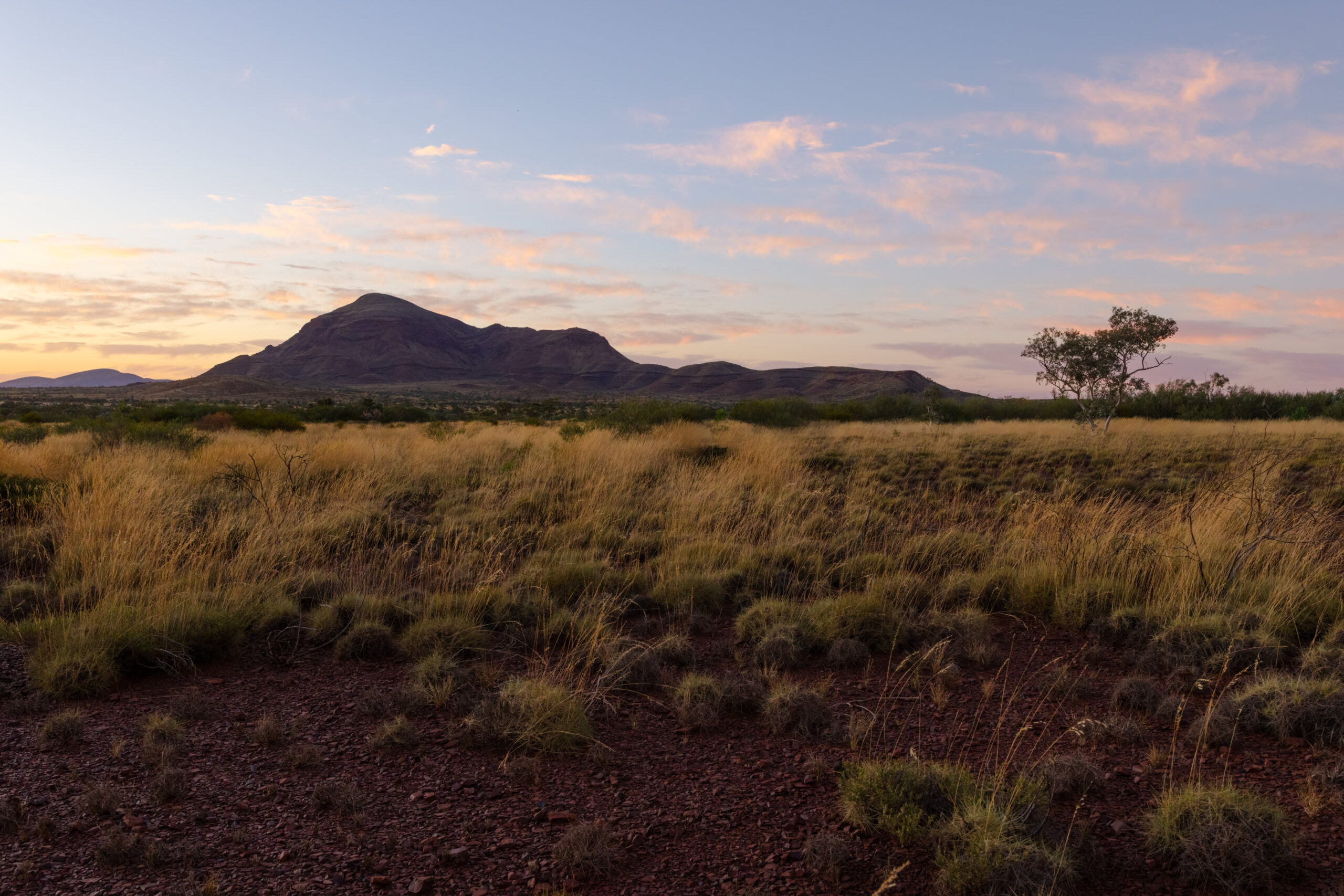
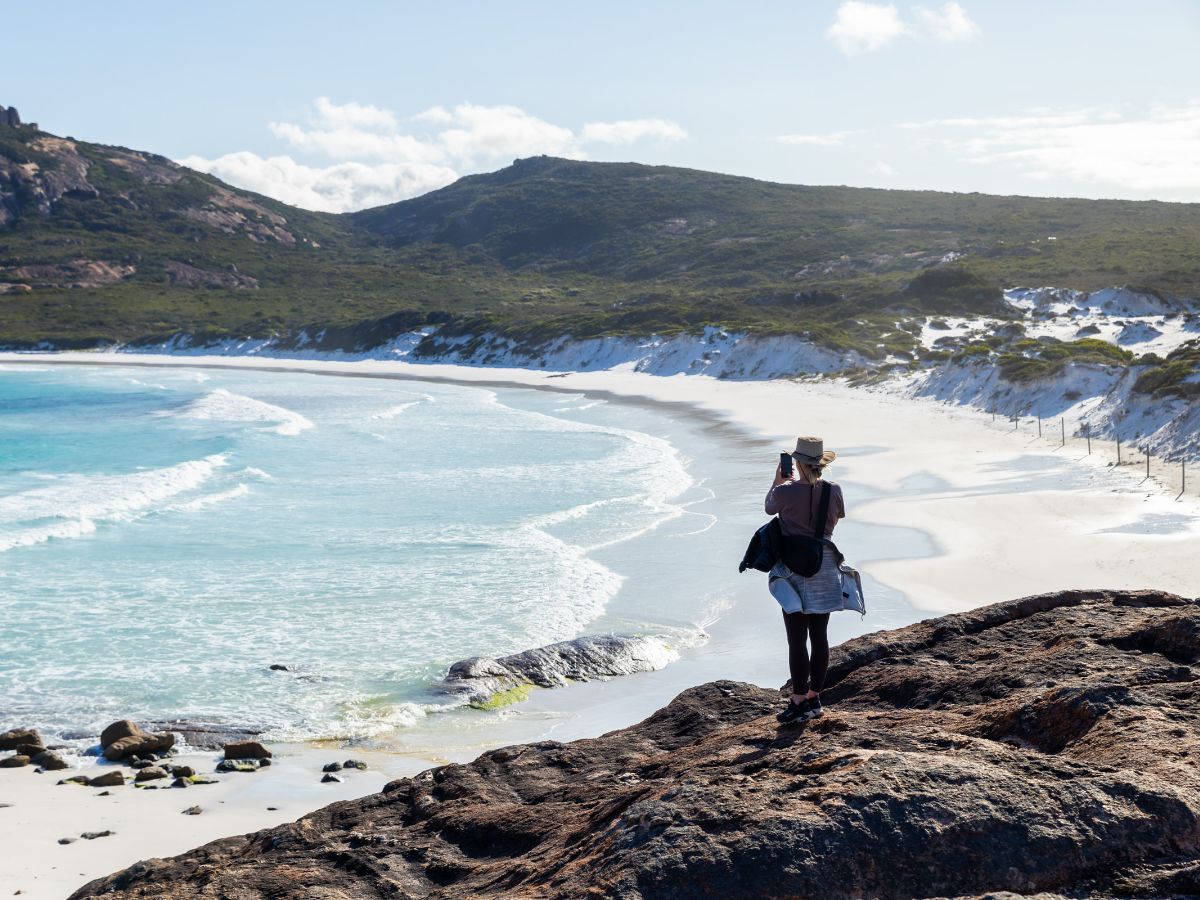
It begins in the warm north, in the Pilbara and the country inland from the Coral Coast, as early as June, while the south still shivers under grey. Through August it reaches the Mid West and the northern Wheatbelt, where the everlasting daisies begin to lay their carpets of pink and gold. By September it arrives in and around Perth, and a capital city puts on a wildflower display most nations would build a national park to protect. Then, through October and into November, the wave breaks in the south, in the Stirling Range, Fitzgerald River and the wild Great Southern coast, where the season keeps its strangest and most spectacular performers waiting until last.
This is the quiet miracle of it. Start in a pink paddock in the Mid West in August and follow the colour patiently south, and you can walk through a single, unbroken spring for three months. Most of the world gets one spring a year. We get one that lasts an entire season and never quite stands still.
Over the coming weeks, this series will follow that wave with you: how to read a flower like a sentence, the orchid that seduces wasps, why the colours are the colours, the strange fact that some of our finest displays appear only after fire. Consider this the overture. The performance is just beginning to warm up in the north.